Abstract: The creation of inviolate Protected Areas for the conservation of charismatic carnivores displaces forest-dwelling communities and reduces their access to vital forest-based livelihood resources like timber, wild food, commercial gums-resins, fuel, and fodder for livestock. We illustrate how exclusionary projects to conserve the Asiatic Lion and the African cheetah in Kuno National Park have adversely affected forest-based livelihoods and the indigenous tree tenure system of the Sahariya, a particularly vulnerable indigenous group in central India. This article traces the social justice implications of long-term restrictions on forest access and how these shape people's response to government attempts to relocate them.
Publications & Reviews
Decolonize Conservation, Global Voices for Indigenous Self-Determination, Land, and a World in CommonDecolonize Conservation: Global Voices for Indigenous Self-Determination, Land, and a World in Common
by Fiore Longo and Ashley Dawson, eds., Survival International
Publisher: Common Notions
ISBN: 978-1-942173-76-2 Published: April 2023, Paperback, Pages: 256
The road to hell is paved with good intentions. In fact, this book makes a strong case, bordering on a polemic, that it is rather bad intentions, those of Big Conservation, that paves the road to hell for the Indigenous peoples. It proposes alternative conservation models fully involving the Indigenous, the traditional, wise guardians of nature, and rightful owners of what became "Protected Areas", National and Transboundary Parks. Despite centuries of displacement by colonialism, Conservation rarely takes place in a vacuum with total wilderness remaining, largely, a myth. Conservation nearly always affects indigenous and local people and should no longer take place at their detriment or without their full and informed consent and participation. This is an eye-opening book that every well-meaning supporter and employee of big conservation organizations should read. Edited by Survival International’s Fiore Longo and Ashley Dawson and written in a reader-friendly, non-technical style, it contains first-hand testimonials/horror stories and views of some 40 authors, mostly indigenous activists but also analysis by academics from 18 countries, in Africa, South Asia (predominantly India) South America, Europe and North America. Most chapters are based on presentations at the “Our Land, Our Nature” congress, which was organized by Survival International, Minority Rights Group and Rainforest Foundation UK, and held in Marseille in September 2021, during the pandemic.
The central argument of the book is more or less: Wilderness is an artificial concept, as on the one hand Humanity is not separate from Nature and on the other around half of the protected areas had been previously inhabited by indigenous people who managed them wisely. Characteristically, the world’s first park, Yosemite, was developed in the land of the Miwok people, 39 years after they had been expelled by miners. California’s empty parks, also thanks to the Climate Change, now catch fire more easily. Big Conservation is an industry, with roots in Colonial times, and like any other industry, in its neocolonial (and neoCO2lonial) form, is out to make money from the Global South. In addition, this industry is hypocritical too as it claims to save nature and communities while actually destroying them both, by displacing communities and allowing extractive activities inside protected areas. It leverages the Climate Crisis to protect vast new chunks of ‘wilderness’ (from the current `17% of the world or roughly the size of Russia, to reach 30% by 2023 under the infamous 30x30 plan ) so as to attract huge additional funding (up to $10 trillion by some estimates, little of which will reach the communities) by greenwashing (via offsets, REDD and nature-based-solutions) corporations so that the latter can go on polluting, extracting and exploiting, sometimes within the said protected area. Other funds are being generated through cooperation with the intelligence community to combat illegal wildlife trade, also a source of funding for extremist groups. In essence, the big 5 (pun intended) conservation organizations of the Anglo world, are the new “East India” and “East Africa” Companies of the colonial era, thus we have a neocolonial conservation model. As their forefathers, they went in first, then came the troops: conservation is becoming increasingly militarized, with lethal effects for indigenous and locals. In Tanzania , Malawi, Zimbabwe, Kenya and Botswana and some of India’s states, among others, there is a shoot-on-sight policy, so rangers are allowed to shoot first and ask questions later. Anyones that moves inside the forest is conveniently called a poacher, even if hunting for subsistence. In Salonga National Park in the Democratic Republic of the Congo, a UNESCO World Heritage Site, the biggest rainforest reserve in Africa and one of the biggest in the world, there have been several “extra-judicial killings'' (a polite synonym for “murders”) of suspected “poachers”. Pastoralists are also unwanted and occasionally shot at. While agro-pastoralism is accepted in France and within Cévennes National Park (a World Heritage Site) for some reason it is not fit for Tanzania and the Maasai traditional pastures. Could this just be plain racism?
GameplanGameplan is a free handbook, aimed at practitioners for maximising the social impact of their events. It is the accumulation of five years research by Doncaster Council's Get Doncaster Moving team and Leeds Beckett University's School of Events, Tourism and Hospitality Management and Carnegie School of Sport.
Gameplan intends to stimulate consideration for the wider social impact that major sporting events can have and provides a framework for event planning with sustained community engagement at its heart. It contains 25 tactics that provide guidance, or 'helpful hows', and 10 downloadable templates. You can read Gameplan using an online reader or download your own copy.
ASEAN Framework on Sustainable Tourism Development in the Post-COVID-19 EraThe ASEAN Framework on Sustainable Tourism Development in the Post-COVID-19 Era was recently released by the association of southeast Asian nations in January 2023 to guide the work on ASEAN’s sustainable tourism development agenda. As articulated in the AEC Blueprint 2025, the vision for Southeast Asia is to make the region a “quality tourism destination” that offers a unique and diverse ASEAN experience and is committed to sustainable tourism development. As a collective effort towards realising this vision, the ASEAN Tourism Ministers have endorsed the ASEAN Framework on Sustainable Tourism Development in the Post-COVID-19 Era with the support of the Economic Research Institute for ASEAN and East Asia (ERIA). The framework identifies focus areas and seeks to capitalise on the work that is already being undertaken by the tourism sector and other relevant sectors in the ASEAN Community particularly in the years leading up to 2025 and beyond.
Fair Work For All?Authors: Anastasios Hadjisolomou, Irma Booyens, Dennis Nickson, Tayler Cunningham, Tom Baum
PDF, 31 pages
The Strathclyde Business School report surveyed 300 workers in Scotland's hospitality sector and found that 95% experienced abuse from customers, owners and managers during the pandemic, while a third are working without a contract. The report's recommendations include creating regulations and systems for pay rises, setting up management training programmes around harassment, and encouraging partnership agreements between employers and employee representatives. Co-author Dr Anastasios Hadjisolomou, pointed out that long-standing employment issues and unfair work in hospitality were exacerbated by the pandemic.
Are We There Yet?Are We There Yet? Travelling More Responsibly with Your Children - by Rachel Dodds and Richard Butler
ISBN 978-1-66784-419-0, BookBaby, 2022
The wordplay in the title (combining typical children’s impatience along with “have we attained sustainability”) already indicates that this is both useful and enjoyable reading.
Whereas many parents fear that travel with young children is complicated and dangerous and that young children will not even remember travelling, let alone travelling responsibly, the authors make a convincing case that responsible travel with children is both feasible and meaningful, and for all, not just the elites - it can save money, if planned. And this is the whole point of the book, to help with the planning.
This innovative guide sets out to do many things at once, yet it succeeds! It tries to explain what responsible travel is, what it involves, why it matters, how parents can handle travelling with children at various ages and on different holiday types, destinations and continents, and on top of that how they can travel better, in a more responsible manner. The hard-earned success at the end is no accident as the authors are both leading sustainable tourism academics and seasoned travellers with children! Without sacrificing accuracy, the book is written in plain and engaging English, and this way, many older children may also understand it.
Even though the focus is on parents, the book includes exhaustive lists of responsible travel guidelines which are valid for everyone and everywhere. Some guidelines are common sense, others you may never have guessed unless having travelled to a particular destination (e.g. “wait for your welcome” in a Maori marae) and some could be debated in perpetuity (“Do not give pens, candy or other gifts to local children”).
‘Boxes’ containing interesting and sometimes rather personal stories from traveling parents, including the authors, and others who are also well-known travel professionals and academics, judging from the credits, serve as useful intermissions. Some of the more complicated first-hand accounts could have been analysed from a political, sociological and psychological perspective, but the goal of the authors is to provide a concise handbook for travelling parents, not deep, academic-level analysis.
As expected, the guide takes a negative view of all-inclusives, cruises, and attractions that exploit animals, while zoos are given the benefit of the doubt as long as they support conservation efforts.
Other notable advice includes:
“Most children cannot focus as long as adults, so pick one or two key things you want to visit in a museum or attraction, rather than trying to see everything” (p.53)
“... try to involve your children in the decision-making.” (p.56)
“For children old enough to read, encourage them to read about the place they are going to visit” (p.59)
“If you have school-aged children, consider taking children out of school for a week or two.” (p.122)
The guide is structured so that chapters can be read independently, which is a good decision even if it inadvertedly creates a few repetitions. The more inquisitive readers will also appreciate recommended online resources of various types and a useful index of responsible travel phrases as in “Do you have recycling?” - which in Chinese is Nǐ yǒu huíshōu ma? - and also in Hindi, French, German and Spanish.
This guide is perfect for its purpose. A shorter and simplified, children’s version, with photos and illustrations, questions/quizzes, tasks and empty pages for travel notes, could also be produced perhaps, so that children could read directly and quietly these words of wisdom and stay out of mischief during those long, responsible, journeys!
More details and to order (Discounts available to US-based Ecoclub.com Members, contact us)
Sustainability Leadership in Tourism
Kaefer, F. (2022). Sustainability Leadership in Tourism, Interviews, Insights, and Knowledge from Practice, Future of Business and Finance. Springer, Cham
This professional guidebook highlights sustainable tourism development and management for businesses and destinations. It presents a unique collection of expert interviews, combined with latest insights and thoughts on the most relevant topics and trends linked to sustainability in tourism, sustainable business management, and destination development. This is a book which offers inspiring personal stories and reflections, and at the same time serves as essential know-how guide for busy tourism entrepreneurs, managers, and developers who care about business resilience and the well-being of destination communities.

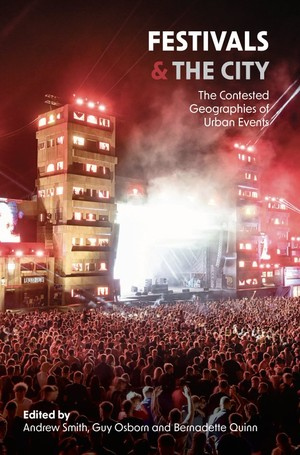
Festivals and the CitySmith, A., Osborn, G. and Quinn, B., 2022. Festivals and the City: The Contested Geographies of Urban Events. London: University of Westminster Press.
This book by Andrew Smith, Guy Osborn and Bernadette Quinn (eds.) explores how festivals and events affect urban places and public spaces, with a particular focus on their role in fostering inclusion. It includes case studies from key Western European festival cities, such as Venice, Edinburgh, London and Barcelona, and examines related social and cultural pressures and concerns over the commercialisation and privatisation of public spaces. The book's key themes are the quest for more inclusive urban spaces and the contested geographies of festival spaces and places. The authors also address more general themes including the role of festivals in culture-led regeneration, economic development and place marketing. The book is published by University of Westminster Press, a not-for-profit, diamond open access publisher.
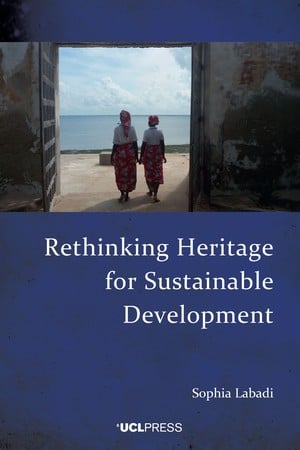
Rethinking Heritage for Sustainable DevelopmentRethinking Heritage for Sustainable Development, Sophia Labadi
Creating Cultural Understanding Through TravelCreating Cultural Understanding Through Travel. CultSense Case Collection
Maria Engberg, Peter Björkroth and Lénia Marques (eds.)
An open source collection of case studies collected under the CultSense project, which aims to address the issue of increased mobility pressures that result in tensions and conflicts between residents and non-locals.
- New Book: Ecocene Politics by Mihnea Tanasescu
- Tourism and refugee-crisis intersections: cocreating tour guide experiences in Leeds, England
- Antarticness, edited by Illan Kelman (UCL Press)
- Reimagining and Reshaping Events: Theoretical and Practical Perspectives
- Socialising Tourism - Rethinking Tourism for Social and Ecological Justice
- Tourism Dynamics: New perspectives and changing directions - New from Goodfellow Publishers
- Airbnb Before, During and After COVID-19
- Sustainable and Collaborative Tourism in a Digital World - New from Goodfellow Publishers
- Handbook for Sustainable Tourism Practitioners: The Essential Toolbox
- Neolocalism and Tourism - New from GoodFellow Publishers
- New study reveals wildlife tends to avoid places recently visited by recreational users
- ILO: Jumpstarting a green recovery with more and better jobs
- Caribbean Community Based Tourism (CBT) Toolkit
- Cabo Verde: The Potential of Local Experiences and Online Marketplaces to Diversify Tourism - Judy Karwacki for World Bank Group.
- The Case for Responsible Travel: Trends & Statistics 2020 - New CREST Report
- Enabling Ecotourism Development in Cambodia - World Bank Group
- England & Wales: Community Energy: State of the Sector 2020 Report
- COVID-19 and Travel, new book reviews its devastating impact on the travel sector
- Unlearn: The Year the Earth Stood Still
- UN Financing for Sustainable Development Report 2020