|
We were in Pantanal in early October. The word "Pantanal" derives from
"pantano" - swamp, the Pantanal, however, is far more than a swamp, it
is the world's largest wetland at 170,000 square km or 42 million acres. It is
an endless internal delta with a variety of ecological sub-regions, large
rivers, standing water, terrestrial systems, and diverse types of wetlands.
Despite appearances, the area was one of the first colonised areas in western
Brazil, as gold was found and the "bandeirantes" arrived in the 16th
century using the Paraguay river. Approximately three million people now live in
the region and the neighbouring highlands. Cuiaba with one million people, was
founded in 1719 and is the major city in the region located in the northern
highlands. Corumba, a quiet little colonial town, is the second largest city of the area, at the border with
Bolivia. Both Cuiaba and Corumba are tourist entrances to the Pantanal.
International tourism is just developing, at the moment the area is mostly
catering for fishing breaks by Brazilian tourists from Sao Paulo. There are some
50 large boats that bring tourists and some of them have capacity for carrying
more than one hundred people. Cuiaba and Corumba are well served by air and bus
from Sao Paulo. Most tourists stay at fazendas (ranches), of various
environmental standards, which provide accommodation and food in styles ranging
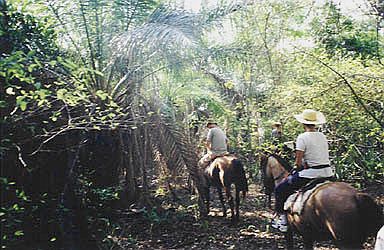
from basic to luxurious and offer daily birdwatching, river, riding and fishing
tours. This Unesco World Heritage site, newly designated in 2000, contains one national park and three private reserves in western-central Brazil, at the south-western portion of Matto Grosso State and the north-western portion of Matto Grosso do Sul State, and its edges reach across the international border to Bolivia and Paraguay. The Pantanal Mattogrossense National Park (PMNP) was designated as a park in September 1981 and as a Wetland of International Importance (Ramsar Site) in 1993. Three private reserves in the region were then designated as Private Reserves of Natural Heritage (PRNH) in June 1996. The Pantanal fauna is extremely diverse and
easy to observe-
allegedly film crews filming documentaries about the Amazon, cheat by coming here to film the
animals. The meticulous visitor may see many of 80 species of mammals, 650 birds, 50 reptiles.
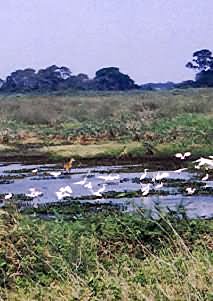
There are also 400 fish species. The Pantanal is a true sanctuary for birds with many species occurring in large numbers. It is one of the most important breeding grounds for typical wetland birds such as Jabiru stork (Jabiru mycteria) as well as several other species of herons, ibis and ducks, which are found in enormous flocks. Parrots are also very diverse, with 26 species recorded in the area including the Hyacinth Macaw (Anodorhynchus hyacinthinus) the world's largest parrot. A large proportion of the remnant wild population of this species, estimated in about 3,000 birds, inhabit the region. Poaching is a serious problem in this vast region however, and a pair of hyacinth macaws had a market value between US$8,000 and US$10,000 in the USA. Habitat destruction is also a problem not due to cattle grazing, which in any case is a four hundred year tradition and a way of life in the Pantanal and generally accepted as compatible with the ecosystem of the region (not to mention the wonderful churascarias), however the ecosystem is under immense pressure from other factors. Large areas of Cerrado vegetation have been cleared and transformed into massive and intensive agricultural operations dedicated to soybean production for export. Deforestation then caused extensive sedimentation buildup in the waterways of the lowland areas. In addition, as the soil quality is widely acknowledged as poor, farmers use large amounts of agro-chemicals, in order to increase productivity, thus increasing the pH level of the waterways, as these chemicals together with untreated sewage from the expanding urban centres fall in the river systems. Organic agriculture has started in the Pantanal but is still a very small player. Legal and illegal mining operations use mercury to extract gold, hydroelectric power plants keep springing up, while the economic downturn has unemployed farm labourers engage in poaching and live animal trade. Tourism, which could give solutions for employment and conservation in this vast area, is largely unplanned, unofficial, and uncontrolled, and although tourist numbers are still small, illegal sport fishing and disturbances in bird nesting areas are becoming a problem. Drug trafficking, is allegedly another problem. To end on a positive note, Bolivia decided two
months ago, with a view to develop nature tourism, to
declare its part of the Pantanal as a Ramsar area too. Cooperation and
synergy of this sort across borders is a must if conservation and sustainable development is
to be successful, and such wonderful places are to be preserved.
|
 Dense populations of species considered endangered elsewhere, can be
found here such as the Jaguar (Panthera onca), the Marsh Deer (Blastocerus
dichotomus), the Giant Anteater (Myrmecophaga tridactyla) and the Giant Otter (Pteronura
brasiliensis). Caimans (Crocodilus yacare) are particularly abundant, at about 10
million, the highest concentration of crocodilians in the world.
Dense populations of species considered endangered elsewhere, can be
found here such as the Jaguar (Panthera onca), the Marsh Deer (Blastocerus
dichotomus), the Giant Anteater (Myrmecophaga tridactyla) and the Giant Otter (Pteronura
brasiliensis). Caimans (Crocodilus yacare) are particularly abundant, at about 10
million, the highest concentration of crocodilians in the world.