|
Transylvania is the
"heart of Romania." For an outsider, it may be more famously
known for its connection with Count Dracula, the fictional character
in Bram Stoker's gothic novel. This novel may have changed this
mysterious land forever, at least in the mind of cinema goers, making
Transylvania a destination for searching the traces of a vampire. Of
course Dracula can nowhere be found today as Vlad Tepes, the Impaler
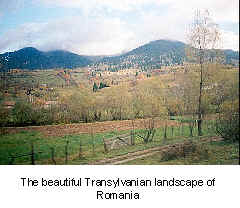
has long left this world. Beyond the myth, one finds the vast beauty
of the countryside. Transylvania is comprised of high mountains and
small hills, and the countryside is colourfully decorated with trees
of different colours spreading across the horizons, with traditional
villages dotted around.
 I
start the trip across Transylvania from the Romanian capital city of
Bucharest, located in the south-east of Romania. Bucharest is a
cosmopolitan city and it worth a day or two to tour the area before
heading north. After two days in this bustling city seeing different
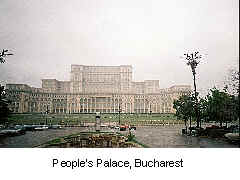
gothic architecture, including the second largest building in the
world - the People's Palace, I took the bus northwards towards the
first Transylvanian City of Brasov. Frequent buses depart for this
three hours journey. As the bus leaves the Bucharest suburbs of
identical apartment blocks, the scenery turns into flat farmland and
small villages. After two hours, the bus finally enters the frontier
of Transylvania and mountainous terrain began to catch my eyes. The
bus then arrived at Sinaia, a famous Romanian ski resort town south of
Brasov. I continued the journey in the bus and within moments I
arrived at Brasov. I
start the trip across Transylvania from the Romanian capital city of
Bucharest, located in the south-east of Romania. Bucharest is a
cosmopolitan city and it worth a day or two to tour the area before
heading north. After two days in this bustling city seeing different
gothic architecture, including the second largest building in the
world - the People's Palace, I took the bus northwards towards the
first Transylvanian City of Brasov. Frequent buses depart for this
three hours journey. As the bus leaves the Bucharest suburbs of
identical apartment blocks, the scenery turns into flat farmland and
small villages. After two hours, the bus finally enters the frontier
of Transylvania and mountainous terrain began to catch my eyes. The
bus then arrived at Sinaia, a famous Romanian ski resort town south of
Brasov. I continued the journey in the bus and within moments I
arrived at Brasov.
 Brasov
is a big city, and arguably the most touristic city of Transylvania
due to its abundance in tourist attractions nearby. However, there are
not too many things to see in Brasov itself, despite it boosts a
romantic and historical town square with the famous Black Cathedral.
The next day, I head down to Sinaia to see the beautiful alpine
landscape. The famous Peles castle is also located nearby. If you ask
any tourists who have been to the area, they will no doubt agree that
Sinaia Monastery and the Peles castle is the most beautiful of all the
attractions in the area. Moreover, Peles castle is also less touristy
than the nearby Bran castle. A visit to the Peles castle is like going
through a history lesson of Romania in the modern times. The castle is
only completed in the year 1883 as the residence of the former
Romanian king Carol I. The interior is primarily built of wood
carving, and the inside are rooms decorated in different European
styles. It boosts professional architecture, even with a central
vacuum cleaner built in the interior. Brasov
is a big city, and arguably the most touristic city of Transylvania
due to its abundance in tourist attractions nearby. However, there are
not too many things to see in Brasov itself, despite it boosts a
romantic and historical town square with the famous Black Cathedral.
The next day, I head down to Sinaia to see the beautiful alpine
landscape. The famous Peles castle is also located nearby. If you ask
any tourists who have been to the area, they will no doubt agree that
Sinaia Monastery and the Peles castle is the most beautiful of all the
attractions in the area. Moreover, Peles castle is also less touristy
than the nearby Bran castle. A visit to the Peles castle is like going
through a history lesson of Romania in the modern times. The castle is
only completed in the year 1883 as the residence of the former
Romanian king Carol I. The interior is primarily built of wood
carving, and the inside are rooms decorated in different European
styles. It boosts professional architecture, even with a central
vacuum cleaner built in the interior.
 Sinaia
is located in foothills of the Bucegi Mountain, which is part of the
Carpathian mountain range. This majestic mountain can be reached by a
lovely cable car ride either from Sinaia or from the town of Busteni,
ten kilometres away. I took the cable car from Busteni up the
mountain. As the cable car leaves the terminal building it rises
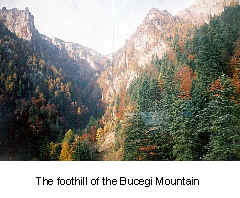
sharply up the mountain foothills. The mountain foothills are mostly
trees with various colours. Some are as tall as couple tenth of
metres, and some of the treetop even touches the cable car itself.
After an approximately 15 minutes, we finally reached the top of the
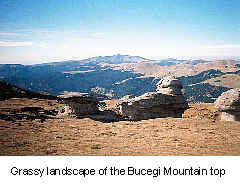
mountain and the scenery changed from tree-lined foothills to a flat
piece of grassland. "What a dramatic scenery change!" I
thought. Soon we reached the cable car terminal. The top is rather
cold but the air is fresh and chilly. Nearby the terminal is a
"cabana", a hostel like type of accommodation for hikers to
crash for a night before another day of hike. Numerous hiking trails
then branched off to various directions with signs clearly marked. It
is pleasant to take a look at the top of the Bucegi mountain. Hills
spread across the horizons till one can see and small villages dotted
around. After taking a few pictures, I took the cable car back down to
Busteni, and the bus ride back to Brasov for the day. Sinaia
is located in foothills of the Bucegi Mountain, which is part of the
Carpathian mountain range. This majestic mountain can be reached by a
lovely cable car ride either from Sinaia or from the town of Busteni,
ten kilometres away. I took the cable car from Busteni up the
mountain. As the cable car leaves the terminal building it rises
sharply up the mountain foothills. The mountain foothills are mostly
trees with various colours. Some are as tall as couple tenth of
metres, and some of the treetop even touches the cable car itself.
After an approximately 15 minutes, we finally reached the top of the
mountain and the scenery changed from tree-lined foothills to a flat
piece of grassland. "What a dramatic scenery change!" I
thought. Soon we reached the cable car terminal. The top is rather
cold but the air is fresh and chilly. Nearby the terminal is a
"cabana", a hostel like type of accommodation for hikers to
crash for a night before another day of hike. Numerous hiking trails
then branched off to various directions with signs clearly marked. It
is pleasant to take a look at the top of the Bucegi mountain. Hills
spread across the horizons till one can see and small villages dotted
around. After taking a few pictures, I took the cable car back down to
Busteni, and the bus ride back to Brasov for the day.
 The
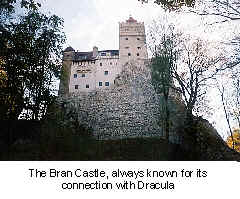
town of Bran, 38km south-west of Brasov is famous for the Bran castle.
For the many tourists especially first time visitors to Romania, the
Bran castle is always known for its affiliation with Count Dracula.
Note the word "affiliation": whether the real person, Veles
Tepes has ever stepped into this castle remains a myth. This castle is
in fact more likely to be a highway checkpoint or a toll booth in the
past. Nevertheless, its image as a "Dracula castle" has
attracted thousands of visitors coming here every year. The bus also
passes through a small city of Rasnov, and there stood the Rasnov
castle, arguably more ruined and impressive than the Bran castle.
However, I didn't make it to this castle due to the lack of time. The
town of Bran, 38km south-west of Brasov is famous for the Bran castle.
For the many tourists especially first time visitors to Romania, the
Bran castle is always known for its affiliation with Count Dracula.
Note the word "affiliation": whether the real person, Veles
Tepes has ever stepped into this castle remains a myth. This castle is
in fact more likely to be a highway checkpoint or a toll booth in the
past. Nevertheless, its image as a "Dracula castle" has
attracted thousands of visitors coming here every year. The bus also
passes through a small city of Rasnov, and there stood the Rasnov
castle, arguably more ruined and impressive than the Bran castle.
However, I didn't make it to this castle due to the lack of time.
 The
next day, I head off by train, passing through beautiful and
mountainous countryside towards the small and medieval town of
Sighisoara. Sighisoara is a medieval town located in the centre of
Transylvania. In fact, it is more than just a medieval town. It is in
fact, according to the Bram Stoker story, the birthplace of Count
Dracula. No wonder why a visit to Sighisoara after visiting the Bran
castle would make a traveller thinks he has really seen Dracula.
However unfortunately, the birthplace of Dracula is merely a
restaurant with a "dragon" sign in the entrance with nothing
more significant. It is a pity that the Romanian ministry of tourism
does not consider this house as a famous tourist attraction.
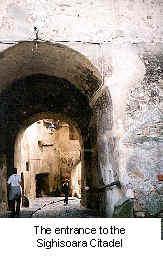
Nevertheless, the clocktower at the entrance of the
"citadel" and the various medieval building combining
pebble-stoned streets make Sighisoara a great place to stroll around
and simply absorb the atmosphere. Sighisoara is also highly influenced
by its neighbouring Hungary due to its history as part of Hungary
centuries ago. The
next day, I head off by train, passing through beautiful and
mountainous countryside towards the small and medieval town of
Sighisoara. Sighisoara is a medieval town located in the centre of
Transylvania. In fact, it is more than just a medieval town. It is in
fact, according to the Bram Stoker story, the birthplace of Count
Dracula. No wonder why a visit to Sighisoara after visiting the Bran
castle would make a traveller thinks he has really seen Dracula.
However unfortunately, the birthplace of Dracula is merely a
restaurant with a "dragon" sign in the entrance with nothing
more significant. It is a pity that the Romanian ministry of tourism
does not consider this house as a famous tourist attraction.
Nevertheless, the clocktower at the entrance of the
"citadel" and the various medieval building combining
pebble-stoned streets make Sighisoara a great place to stroll around
and simply absorb the atmosphere. Sighisoara is also highly influenced
by its neighbouring Hungary due to its history as part of Hungary
centuries ago.
 A
further west, after a long three hours ride reach the city of Cluj
Napoca, the gateway to Transylvania in the west. The train was an hour
late and it departs in the evening, so it is hard to view the scenery
outside. Moreover, it was in a Friday night when students and workers
go back to their hometown, and as a result the train was packed. Cluj
Napoca is a famous university town and a leading educational centre in
Romania, and it has a typical Hungarian feel due to its mixture of
Hungarian and Romanian influence. St. Michael church at Piata Unirii
dominates the city centre with an equestrian statue stood nearby. Most
importantly, Cluj Napoca is also a major transportation hub as trains
depart to nearly every corner of Romania from here. A
further west, after a long three hours ride reach the city of Cluj
Napoca, the gateway to Transylvania in the west. The train was an hour
late and it departs in the evening, so it is hard to view the scenery
outside. Moreover, it was in a Friday night when students and workers
go back to their hometown, and as a result the train was packed. Cluj
Napoca is a famous university town and a leading educational centre in
Romania, and it has a typical Hungarian feel due to its mixture of
Hungarian and Romanian influence. St. Michael church at Piata Unirii
dominates the city centre with an equestrian statue stood nearby. Most
importantly, Cluj Napoca is also a major transportation hub as trains
depart to nearly every corner of Romania from here.
 Transylvania
is famous for all kinds of ecotourism, including mountain hiking, rock
climbing and also equestrian activities. There are numerous ecotour
operators who organise various kinds of eco-trips for tourists to
Transylvania. Days before, I got an invitation to visit an equestrian
tour operator in the village of Lunca Ilvei in Northern Transylvania.
This company organises tour packages for western tourists to horseback
ride across the woods of Northern Transylvania and Moldavia, visiting
various sites and monasteries as well as providing hospitality
services in the guesthouse owned by them. They claim their business as
"ethical" since a large part of their revenue contributes
back to the local community. Furthermore, they are no compromise of
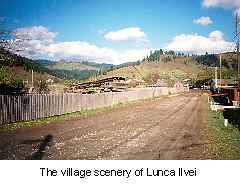
high quality of service either. Nevertheless, the village of Lunca
Ilvei is surrounded with beautiful landscape of alpine and wooden
villages dotted around the hills. The director of the company told me
enthusiastically that he owns an organic farm for his daily supply of
food for himself as well as for his guests, and all he uses for
farming is a horse and a traditional plough. He is proud of these
traditional tools as he says it is lighter, as a result allows more
oxygen in the soil. I also got a try to plough the field using his
traditional tool lead by a horse. Well, it seems to be easy for me but
for the many others it is no easy task! Transylvania
is famous for all kinds of ecotourism, including mountain hiking, rock
climbing and also equestrian activities. There are numerous ecotour
operators who organise various kinds of eco-trips for tourists to
Transylvania. Days before, I got an invitation to visit an equestrian
tour operator in the village of Lunca Ilvei in Northern Transylvania.
This company organises tour packages for western tourists to horseback
ride across the woods of Northern Transylvania and Moldavia, visiting
various sites and monasteries as well as providing hospitality
services in the guesthouse owned by them. They claim their business as
"ethical" since a large part of their revenue contributes
back to the local community. Furthermore, they are no compromise of
high quality of service either. Nevertheless, the village of Lunca
Ilvei is surrounded with beautiful landscape of alpine and wooden
villages dotted around the hills. The director of the company told me
enthusiastically that he owns an organic farm for his daily supply of
food for himself as well as for his guests, and all he uses for
farming is a horse and a traditional plough. He is proud of these
traditional tools as he says it is lighter, as a result allows more
oxygen in the soil. I also got a try to plough the field using his
traditional tool lead by a horse. Well, it seems to be easy for me but
for the many others it is no easy task!
 I
stayed at their guest-house for the night and enjoyed their talks and
hospitality. The next day, I took the train back to Cluj as I
continued further west until I reached the western frontier of
Transylvania. This time, as the city of Oradea comes near I realised
that I have passed through the vast region of Transylvania. All it
left behind is my memories of beautiful scenery of this region; of its
traditional villages and unspoiled countryside. Most importantly, it
is also the hospitable people that I met that would remains in my mind
for the times to come. I
stayed at their guest-house for the night and enjoyed their talks and
hospitality. The next day, I took the train back to Cluj as I
continued further west until I reached the western frontier of
Transylvania. This time, as the city of Oradea comes near I realised
that I have passed through the vast region of Transylvania. All it
left behind is my memories of beautiful scenery of this region; of its
traditional villages and unspoiled countryside. Most importantly, it
is also the hospitable people that I met that would remains in my mind
for the times to come.
 Contact
the Author Contact
the Author
References:
Miller, Elizabeth. (2002) What are the Origins of Count Dracula?
http://www.ucs.mun.ca/~emiller/count.htm
Carney, P et el. (2001) Eastern Europe. Lonelyplanet Publications,
London.
Article
Copyright 2002. Stephen S.H. Mak, All Rights Reserved
|


 Special:
A Trip across Transylvania
Special:
A Trip across Transylvania