


 |
 |
 |
 |
|
 |
 |
10
ECOCLUB, Issue 89
Their territories are being invaded by hundreds of illegal loggers exploiting some of the world's last commercially-viable
mahogany reserves. 90% of the timber is exported to the USA. The loggers regularly encounter uncontacted Indians. The
Indians are particularly vulnerable to any form of contact because of their lack of immunity to outsiders' diseases. After some
Murunahua were first contacted by loggers in 1996, more than 50% of them died. 'They are there, living deeper in the jungle,'
said Juan, one of the Muruanahua survivors, speaking about the uncontacted Murunahua. 'They're not members of our family,
but separate. They live in the forest.' Survival's Director, Stephen Corry, said 'These are Peru's most vulnerable citizens and at
the moment these reserves aren't worth the paper they're written on. Unless the government actually removes the loggers and
stops others from entering, the uncontacted Indians are likely to be wiped out.'
?Miriam Ross is Press officer for Survival International (www.survival-international.org )
FACES OF ECOCLUB TODD COMEN
Todd Comen is a professor of hospitality and tourism management at
Johnson State College in Vermont, USA. He is also managing director of
The Institute For Integrated Rural Tourism (Web:
www.integratedtourism.com ). Professor Comen earned his Masters
Degree from Cornell University in Hospitality Administration and a
Bachelors degree in Economics from Lewis and Clark College. His love
for rural and eco-tourism began in 1982 with the development and
operation of a country inn. In 1990, he developed an agrotourism
operation on an apple and vegetable farm in Wisconsin. Since 1997,
Professor Comen has combined tourism research with his practical
lodging, restaurant and tourism operations to bring a non-traditional
approach to his workshops and courses. Todd has worked with NGO’s in
Romania, Poland, Honduras, Costa Rica, and Belarus. He has developed a new strategy for rural development and poverty
alleviation that is detailed in his book on integrated rural tourism.
NEW PUBLICATION
This month we have added to our Library two very interesting and unusual publications edited by our Member, Professor Tania
Kapiki of the Department of Tourism Management of the Alexandrio
Technological Educational Institute (ATEI
– Web:
http://www.tour.teithe.gr/neo ) of Thessaloniki, Greece. The books / reports are by-products of a EUROPE AID project entitled
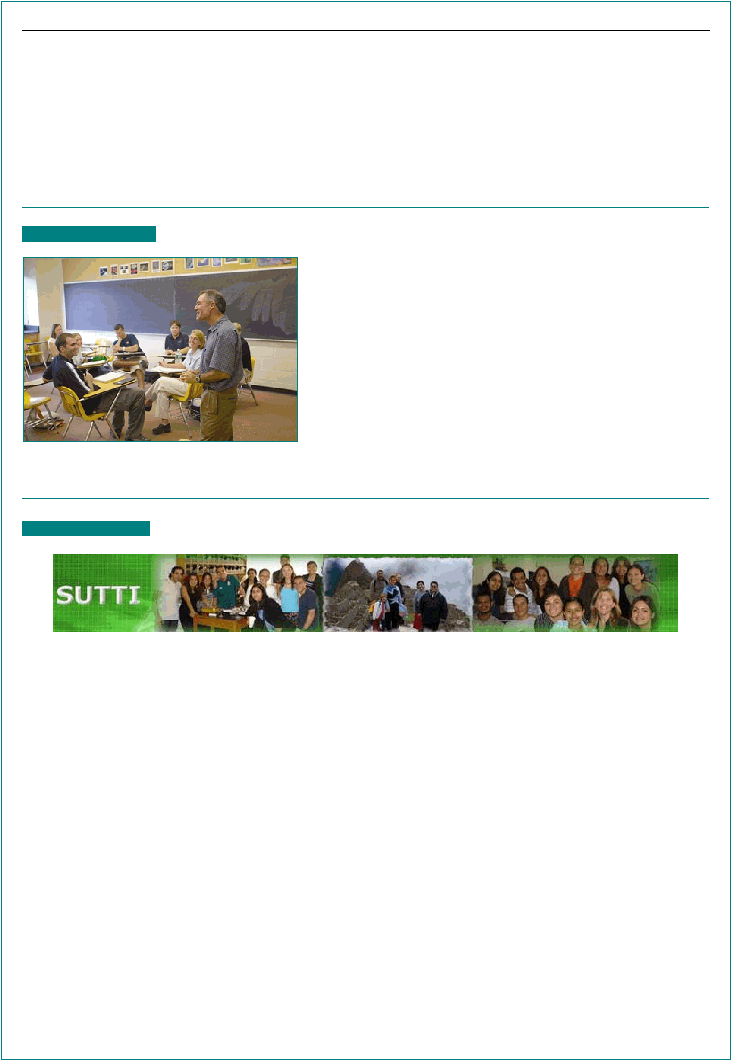
‘Sustainable Tourism Training & Internship Enhancing Collaboration between Europe and Latin America’ (or SUTTI for short),
which was coordinated by ATEI between December 2004 and December 2006. Participants included Erasmushogeschool
(Brussels, Belgium) CETA Centro de Estudios de Turismo (Barcelona, Spain), Universidad Nacional (Heredia, Costa Rica),
Universidad Popular Autonoma del Estado de Puebla (Puebla, Mexico), Universidad del Pacifico (Santiago, Chile) and
Universidad Cientifica del Sur (Lima, Peru)
The first book (227 pages, ISBN 978-960-89573-0-5) is entitled ‘Research Study on Ecological Areas’ and covers the Evros
Delta, the traditional village of Nymphaio, the Prespes Lakes, and the famous Zagorochoria (46 villages of the Zagori
mountains) area in Epirus. The book highlights the importance of Ecotourism in the current and future development of these
sensitive areas. The innovative aspect is that although the subject matter is Greek Ecotourism, the primary and secondary
material was collected by the twelve Latin American students who participated in the project. The information collected is
valuable, although some of the otherwise interesting recommendations made reflect the lack of background knowledge of local
socio-political conditions and the language barrier. There is also overlapping for the reader, as the students were divided into
three teams according to nationality and produced three different reports for each location. Differences in the report findings
between the groups, which would have been very interesting, were not detected. Overall however, a valuable reference for
undergraduate students.
The second book (85 pages, ISBN 978-960-89573-1-2)) is entitled ‘Description and Analysis of the SUTTI Project – Best
Practice Findings’. It is a sort of insider’s guide to the program and details the administrative method and experience of the
project coordinators. As such it is valuable to other organisers of student-exchange programs in tourism and an adequate
exercise in transparency (if self-congratulatory) as it incorporates a range of issues everything from the selection criteria of the
organisations and students to feedback after the project (on lecturers, internships and visits). We would have liked to see more