|
|
|
123 Flash Menu Placeholder.
|
|
It is a bright morning on July 9, 2007 at the end of the
Shandur polo festival that with a group of 6 people we start from Shandur
over Chamarkand Pass to participate in the Broghil festival and to continue
our trek over Darkhot pass further on to the Yasin valley. After night stay
at the Chamarkand pass (4328m), we manage to get to the village Chapali
(2500m), 8 kilometres north to Mastuj. This village is acknowledged for its
traditional folksingers, folk dancers, solo sitar players and vocalists. We
stay with Mr Akhtar Murad Khan, whose house perches atop the mountain
overlooking the village.
From this village to Lashkargaz (3660) it is about 3 days
travel. We arrange a 4X4 Jeep—the only dependable source of transport in the
mountains of the Hindukush—upto the end of the Brep village where the bridge
that connects the upper Yarkhun valley is broken and hence we have to carry
the entire luggage through the narrow and rickety pedestrian bridge to the
other side, where we bargain with Mr Dawood, the driver, who will charge us
Rs 8000 for Kishmanja (3300m), the beginning of Broghil. Our travel is
interrupted once as we stop for lunch at Pawer, the house of Mr Hakim Jan,
the renowned personality of the area. He is also a first-class sitar expert
and plays some of the oldest piece of music to the cheer and appreciation of
the guests. This place is the best camping site but we don’t have it in our
schedule to stay here. Rather we continue for Yarkhunlasht (3048) after
lunch.
It takes us 2 hours to reach Kishmanja. You don’t have a vehicle beyond this point. If travelling by foot, either from or to Broghil, then you have to compulsorily stay at Kishmaja whether or not you like the idea. Here we meet Mr Momin Khan, who speaks Dari Persian and Wakhi language and is proud of his Central Asian ancestors. He is dressed in the self-made raw leather coat and shoes called ‘Kon’. Here the cook prepares our lunch whilst we send for horses at Pechuztch or ‘the hot spring’ around which the village has developed. We arrive at Chikar for night stay and camp outside in the open meadow. By the night we listen to dogs barking, donkeys braying and horses neighing. We feel rather abandoned in a high and dry place under the bold shine of stars in the pitch-dark.
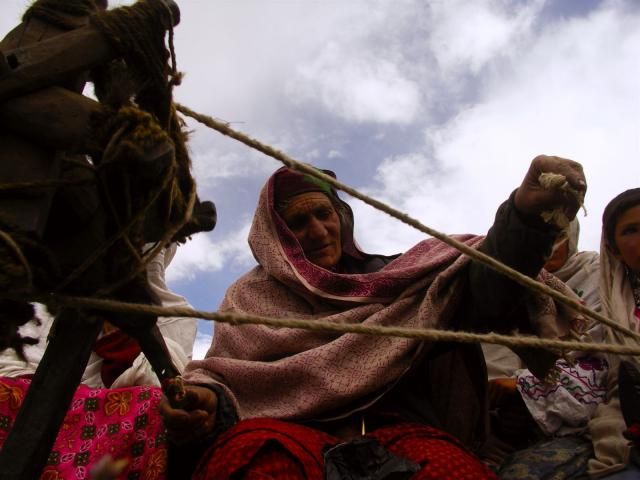
We awake to the yellow sunrays on the glacier of Chikar (3570m) to the south and in the adjacent pastureland. The nomads here just gather around and look at us in disbelief and some of them really shy away. Young girls play flute as they tend livestock further up the pasture. Smoke from the makeshift nomadic shelters makes a wavy column against the sky whilst children and elderly people sit lazily in the morning sun. As the sun in the nearby Chikar glacier presents an incredible view, we take a good deal of snaps. We ride the sure-hoofed mountain ponies for Skarwarz
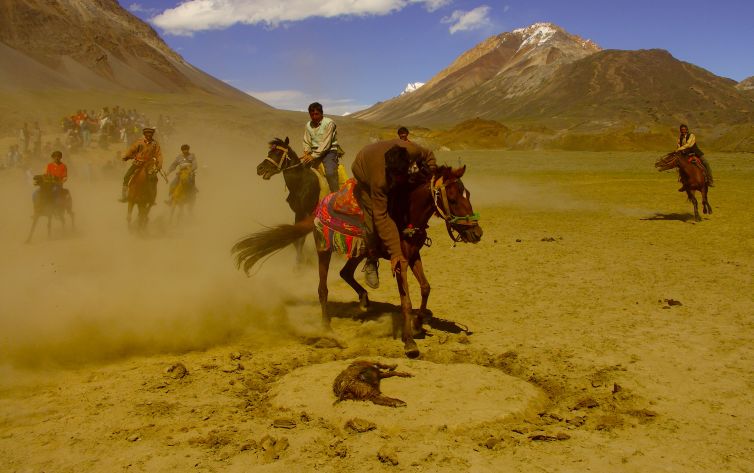
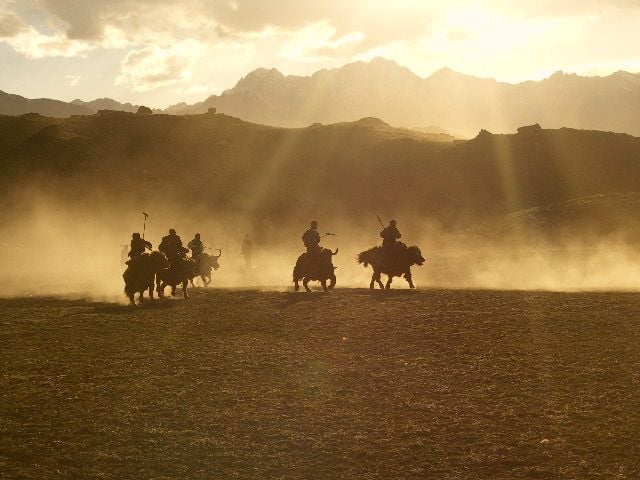
(3510), the venue of the Yak Polo festival. It takes 5 hours before we reach
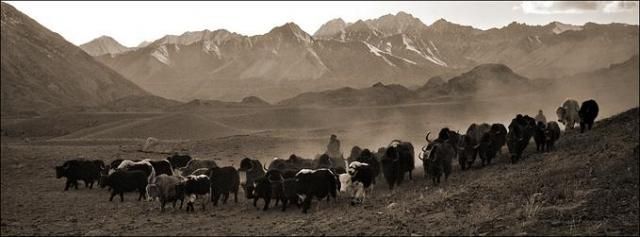
this place, which is a big pastureland shared by the entire Wakhi
communities. Yaks, horses, donkeys, sheep and goats are being grazed here.
The landscape is beautiful with a range of wild flowers such as edelweiss,
the sight of which brings a broad smile in the face of our Swiss group
member who elaborates that edelweiss is Switzerland’s national flower.
Golden marmot is also found in abundant here. They make underground tunnel
and live in a family system. Broghil, the eastern Pamir region, is a
wetland, appropriate for a variety of flora and fauna. It is one of the
biggest peat bogs in the country and the locals dig out and get them
sun-dried for fuel to be used in the harshest of 6 months long winter every
year.
Disclaimer: Any views expressed in this magazine belong to their respective authors and are not necessarily those of ECOCLUB S.A. Although we try to check all facts, we accept no liability for inaccuracies - which means you should not take any travel or other decisions based only on what you read here... Use of this magazine is covered by the Terms & Conditions of the ECOCLUB.com Website and by your uncommon sense and good humour. |


 Adventure
in the Eastern Pamir
Adventure
in the Eastern Pamir