ECOCLUB, Issue 95
3
To further the idea of improving a home stay and income for the host families, in the third quarter of 2007, YHL piloted a home
stay in villages in La Bang I commune of
the Lomphat district, which includes trekking on foot, elephant trekking, and
overnight at the elephant keeping families. In this case, the host family (which also owns an elephant) will receive fees from
lodging, provision of meals and sleeping gears, and, more importantly, hiring the elephant at US$30 per day. This type of home
stay will also support and encourage the families to keep elephants at their home areas in Ratanakiri where habitat and food is
abundant and still quite intact. (Unfortunately many elephants in Ratanakiri have been sold and taken to Siem Reap – the
province of the famous Angkor temples- where they are held in captivity and used purely to serve tourists on a daily basis).
During 2007 we performed the following improvements:
Restaurant Expansion: We created an outdoor area for guests to enjoy their
food and the scenery at the same time.
Lake Cleaning: We continued to maintain a very clean lake shore, in
conjunction with three groups of the association and the community of San
Juan.
Medicinal Garden: We initiated the
establishment of a garden of
medicinal plants; currently it has a variety of 20 different plants and we are
in the process of developing medical recipes.
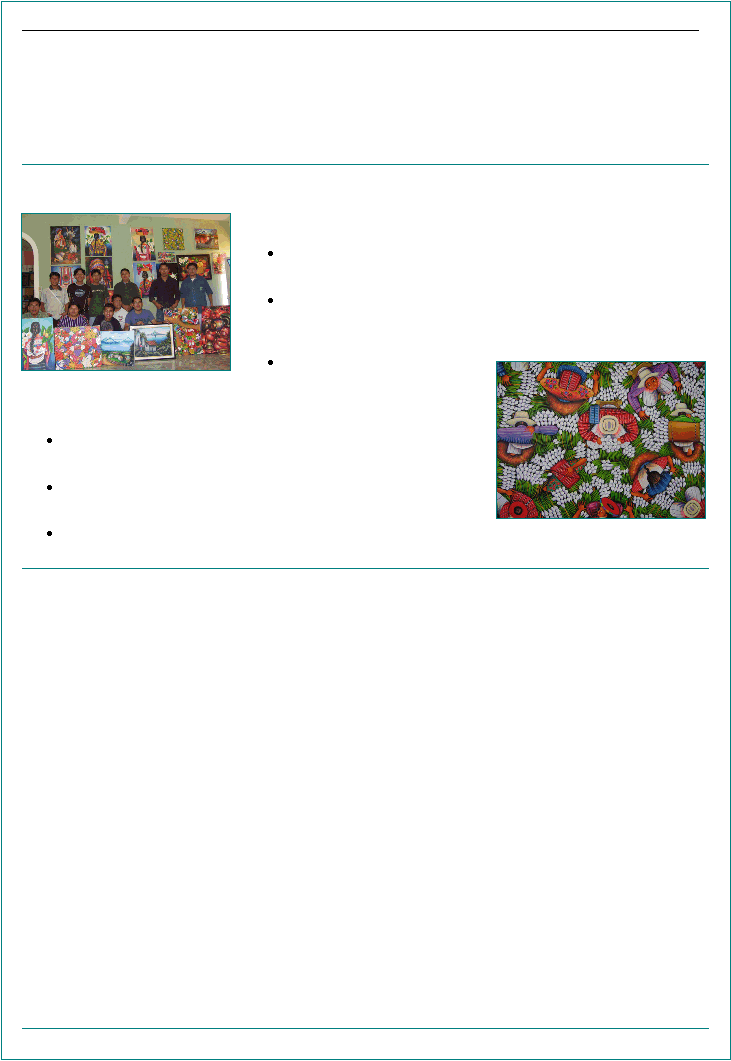
Support to Craftsmen: We continue to support weavers, painters, tour guides
and local stores, without receiving any commission.
Certification: We received a certification of Good Practice by Green Deal. It
was obtained with high marks for our performance.
Travel Fairs: We participated for the first time in a global tourism fair, the World Travel Market.
This Year we made good progress. January, February and March were really unusual this year. Climate change was to be seen
everywhere. Normally in summer it rains heavily every evening and the rivers rise. This year however, we just had 4 instances
of rain in three months, only one of which resulted in rising river levels. We got our biosystem completed by the end of March
and are now treating all our dirty water, gaining 2 hours of biogas every day plus biofertilizer that we use in our Fruit and
Vegetable garden!
Our 100% Recycling project attracts more friends every day and so our surrounding waterfalls look much cleaner every year.
We started a project with a Math teacher: training other teachers to take their students to field studies and applications of terms
like Trigonometry in our Private Heritage Reserve .We show them how good practices are easy for everybody to do ,- to save
water, energy, to recycle and avoid waste.
Other highlights of our work with our surrounding community was an event we organised together with the Serra dos Orgaos
National Parc at a local school. There was a puppet theatre play about water pollution, as well as a documentaries and a debate
about the environment. The state water company CEDAE participated with the display of a mini water
treatment
system, the
energy company AMPLA showed good practices with energy, while
the Health department of Mage informed about DST-
AIDS-and Diabetis. El Nagual presented recycling, sustainable artwork, private conservation and invited people interested in
making hikes and reforestation around the river and springs to come and visit us.
Mariana held mosaic workshops with broken floor tiles found at constructions or at the banks of the river, using the wall of the
School. The workshops were free and attended by about 20 people.
El Nagual also represented APN (Association of Owners of Private Heritage Reserves of Rio) in the Council of the Central
Atlantic Rainforest of the Rio State. We proposed to our municipal government the creation of a municipal Protected Area based
on our Management Plan, covering an area of 141 square kilometres. We are also launching another project to educate other
private heritage owners about good practices, environmental education, alternative energy, ecotourism, with the assistance of
NGOs and Universities.