14
ECOCLUB, Issue 95
event. Tourism is growing rapidly and already contributes around 8% of GDP, 11% of Exports, and 13% of Employment, and it
is hoped that through the actions of groups such as the Estonian Ecotourism Society, its development will continue to be
sustainable.
ECO PAPER
Will predicted climate change compromise the sustainability of Mediterranean tourism?
by Dr.Allen Perry, Senior Lecturer, Department of Geography, University of Wales Swansea, UK
Abstract: Projected Greenhouse Gas induced climate change may alter the frequency and intensity of events like heatwaves,
drought and fires which affect tourists in the Mediterranean. The summer of 2003 is used as an example of the impact of climate
on tourists to the area. Tourists reactions and the possible adaptive responses that the tourist industry might adopt are
considered. The sustainability of tourism in the future is also investigated.
The Mediterranean is currently the world’s most popular and
successful tourist destination with over 120 million visitors every
year.
The climate of the Mediterranean is perceived, by many tourists
as idyllic, benign and delightful. It is the usually fine summer
weather and clarity of light, rather than the heat-waves,
droughts, storms and floods that can plague the region at times,
that have made the area attractive to north Europeans for many
centuries. Climate constitutes an important part of the
environmental context in which all recreation and tourism takes
place and because tourism is a voluntary and discretionary
activity, participation will depend on perceived favourable
conditions. The main impacts on sustainability will include
excessive summer heat, protracted drought and other
hydrological stresses, including pollution problems. Increases of
sea level will erode tourist beaches whilst diseases, including
malaria may well become a significant problem. These threats
will be considered in this paper.
Whilst in the eighteenth and nineteenth centuries it was the
winter that was “the season” with the aristocracy of northern
Europe fleeing the cold and dark conditions, today it is mass
“sun-lust” package tourism which leads to a seasonal peak in
high summer. A UK survey suggested that for over 80% of
overseas holiday-makers better weather than can normally be
found in the UK in summer was the primary reason for choosing
an overseas holiday. Concern about skin cancer and worries
about UV-B radiation has so far tended merely to modify
behaviour (e.g. the use of more effective sunscreen treatments),
rather than cause a change in destination preference. It is still the
case that for many the acquisition of a sun tan and the purchase
of a holiday is as important as buying consumer durables for the
home. The beach has become a fun place.
Deserted Beaches or Desert Beaches?
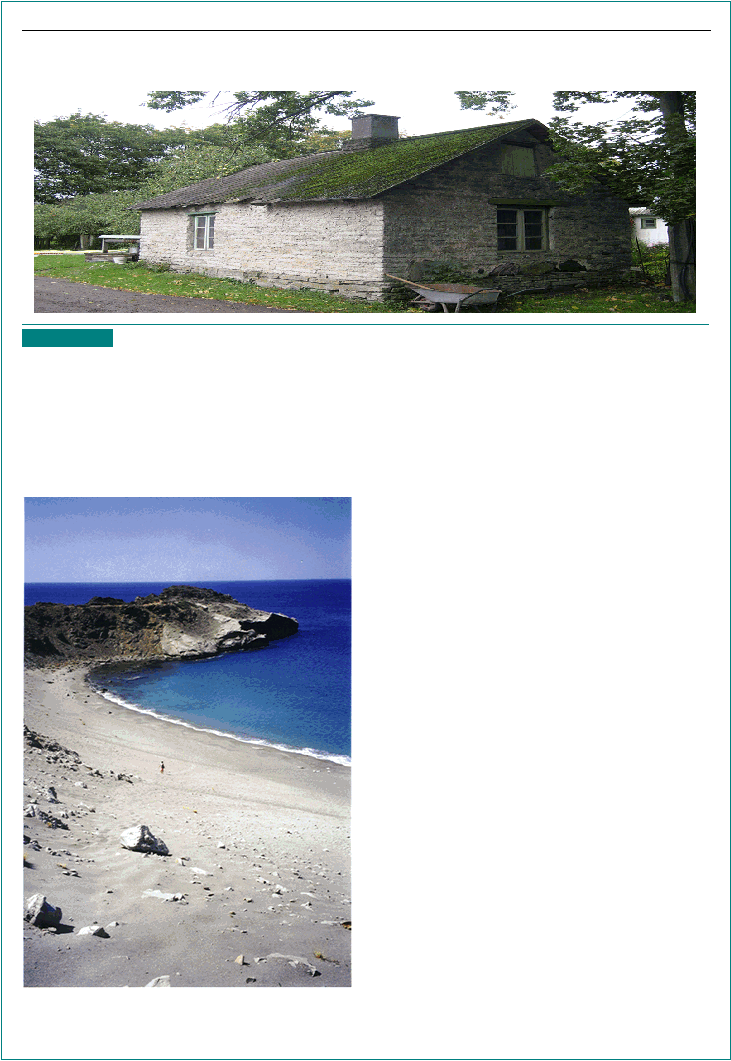
(ECOCLUB photo from southern Crete)