
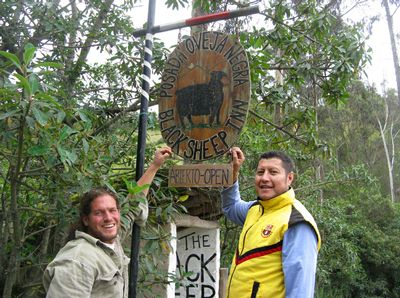
 Chugchilán, Ecuador (1 June 2012) - Following a decision by its founders, Black Sheep Inn has become 100% community operated: Edmundo Vega Estrada, the new administrator was born and raised in Chugchilán. Edmundo graduated from the local elementary school Juan Jose Flores over 40 years ago before tourism had developed in the area. He moved to Latacunga and then to Quito where he began working in the hospitality industry. From dish washer to kitchen manager to banquet administrator to restaurant manager; he worked at the JW Marriott, Hotel Quito, Hilton Colon and high-end restaurants. Edmundo returned to Chugchilán in April 2012 after being away for 30 years. He wanted to live close to his elderly mother and brother and he wanted to run the Black Sheep Inn. Edmundo speaks a bit of English and French, in addition to his native Spanish.
Edmundo’s team consists of original Black Sheep Inn employees: Narcisa Sigcha, Esther Cunuhay, Olga Pastuña and Martha Cuyo, who have been involved with Black Sheep Inn for years. Cesar Cuyo and Jorge Guamangate are the maestros who helped build the Ecolodge and still maintain the property. Black Sheep Inn is open year round for individual bookings.
Black Sheep Inn founders Andres Hammerman and Michelle Kirby reside on an adjacent property and are assisting with the transitional period to ensure quality and to maintain the high level of sustainable practices that made the Black Sheep Inn famous and the recipient of numerous awards including the Skål International Ecotourism Award 2006 and the Smithsonian Magazine/Tourism Cares for Tomorrow Sustainable Tourism Award 2005.
Black Sheep Inn’s rural Andean location offers world renowned day hiking, horseback riding and excursions to: Laguna Quilotoa, Rio Toachi Canyon, cloud forest in the Iliniza Ecological Reserve, indigenous markets, and local cooperative workshops producing handcrafted furniture, handmade woolen knitwear and Swiss-style cheeses. Eco Permaculture Features include: solar panels, adobe construction, composting toilets, recycling, roof water collectors, gray water systems, organic gardens, community education & aid work, reforestation, erosion control and more.
For more details visit http://www.blacksheepinn.com/