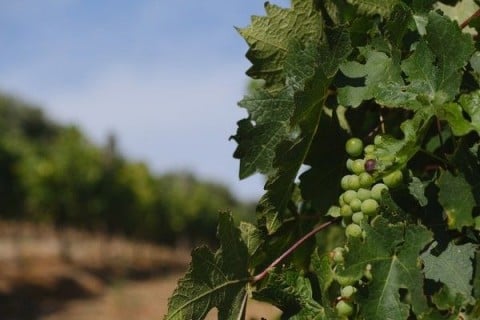
{mnf=off} Ecotourism in the Cape Winelands of South Africa, in particular, is booming as an increasing number of visitors to the Western Cape Province want to explore the multitude of eco-friendly activities in the area. Apart from indulging in the freshest organic produce imaginable at a local farmers market or embarking on a full-moon hike through a lush green valley, visitors can also enjoy some of the best sustainable wines in the entire world. Although you do not have to be a wine-lover in order to enjoy a day at one of the superb wineries in the region, enjoying a good glass of sustainable wine will definitely add an element of merriment to your very beneficial eco-tourism excursion. Sustainable wines are skyrocketing in popularity Sustainable wines have been all the rage for some time and, thankfully there is no shortage of superb offerings in the Western Cape. These wine farms are not only aiding the environment and local communities through sustainable production and business practices but actively contributing towards ecotourism in the region as well. Apart from producing exquisite sustainable wines, they also offer visitors a range of eco-experiences such as farm tours, nature hikes, and educational talks to enjoy while...
ECOCLUB Blogs™
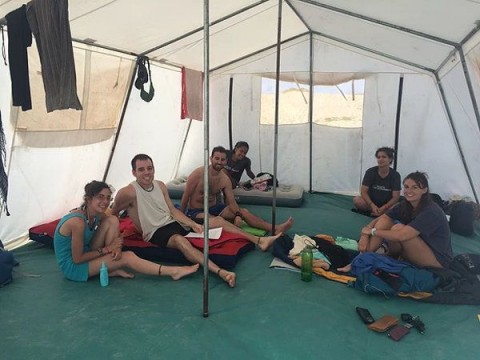
To be alongside a nesting Loggerhead Sea Turtle is a privilege. Every year they pull themselves up onto the beaches and dig deep into the sand to hide their eggs, producing nests that can house a hundred eggs that will soon hatch into baby turtles ready to face the dangers of the big wide world. But on the island of Sal, in the Cape Verdean archipelago, the Loggerhead Sea Turtles are under threat. Under intense development, the numbers of people and domestic animals arriving on this island is increasing all the time. Because of this, turtles nesting here have been long under attack by poachers killing the nesting females, dogs digging up the eggs, and illegal developments. Voluntourism with the organisation Project Biodiversity has made great strides in combatting these threats, and allows nature-lovers to get first-hand experience of these majestic animals by staying a few weeks with the rangers as a volunteer. There is nothing quite like the feeling of having your first turtle drag itself out of the water and towards you to nest! Volunteer nights can be hard, patrolling alongside long-term rangers to assist in collecting data, GPSing tracks, moving nests, and even tagging the animals for further...
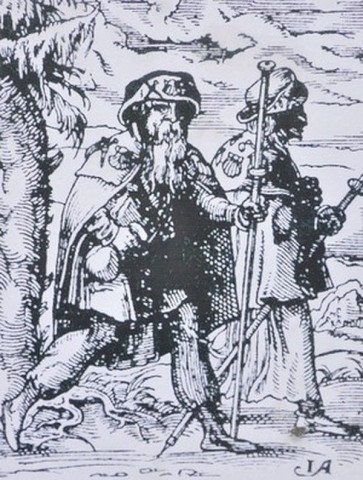
The Camino de Santiago, or Way of St. James, is the main tourist resource of Galicia, in Spain, and beyond, it is also a national and international icon. With adequate long-term planning and integrative and collaborative management, it would be positioned as a cultural and sustainable tourist destination, according to a demand in search of experiences, immersion in the local culture and observation of nature. The Master Plan and Strategic Plan of the Camino de Santiago in Galicia 2015-2021 includes four strategic lines as main objectives of action, an example of the intentionality in positioning the destination as socially, economically and environmentally sustainable. The four lines are: 1. Coordination and administrative organization: highlighting the creation of bodies that facilitate coordination and participation among the different agents, such as the creation of the International Committee of Experts of the Camino de Santiago and the strengthening of relations with other international “caminos” 2. The preservation and enhancement of the heritage values of the Camino de Santiago: promoting tourism as a tool for the conservation of material heritage and the strengthening of rural Galician identity and the xacobea culture through the enhancement of their traditions. 3. The conservation and maintenance of the Camino de...
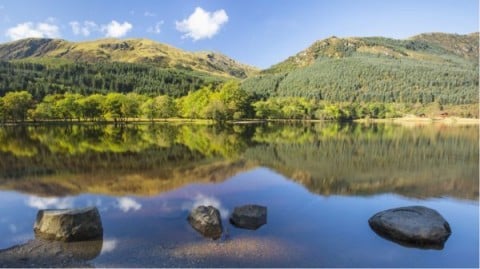
As tourism becomes a bigger and bigger industry, it is important to be as environmentally conscience as possible. As carbon footprints mount up from flights, it is refreshing to see travel tourist companies try to offset their greenhouse emissions through a variety of processes. In Edinburgh, it is common to take day trips to the Scottish Highlands to see the majesty of Glen Coe and Loch Ness via tour bus, with your driver/guide showing you the secret spots and divulging interesting local facts. In order to create an ecologically sustainable practice, tour operators such as Highland Explorer have implemented their own Environmental Charity Offering Scheme. They pioneered this scheme in order to allow guests to donate a small sum to preserving Scottish natural wildlife, while also promising to match any donations. This money goes to the charity Trees For Life, who have planted over half a million trees so far to restore the Caledonian Forest in the Highlands of Scotland and are working towards 100,000 trees this year as part of the United Nations Environment Programme “Billion Trees”. In todays ecological climate is imperative for everyone, not just in tourism but in all industries, to take steps to make their...
The greenest, quickest and safest way to explore a big city often is to use the underground. No hopping on and hopping off double-deckers stuck in traffic or lethal (to you and pedestrians) electric scooters. No more so than in Athens where many underground stations are museums in their own right. Get off at any station and walk 1 km in each direction and you will sample the real sounds, tastes and smells of each neighbourhood. Taking Line 3 to Egaleo station today I missed a couple of trains due to the fascinating ancient artefact displays next to the platform. And two more trains must have already passed by while I was admiring the best preserved section of the 2,500+ year old Sacred Way or ΙΕΡΑ ΟΔΟΣ (see picture) discovered a few years ago when the station was built!
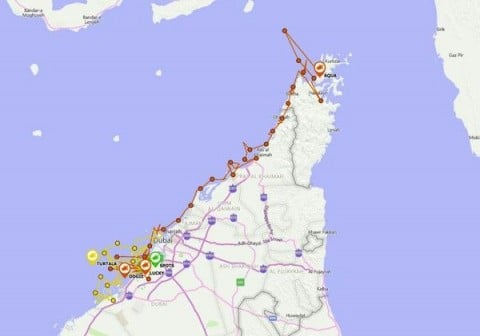
Earth has suffered five mass extinctions, the last one being approximately 65 million years ago. It wiped out the dinosaurs, along with 60% of species that populated the planet. These five extinctions have one thing in common - they were all caused by natural phenomena; a stellar explosion, tectonic plate movement or meteor showers. Our planet is now facing the sixth mass extinction. However, this one is different from the rest. For the first time in history, human activity is to blame. Our oceans are taking the brunt of the turmoil. We are facing sea temperature increases, pollution, over-fishing and bycatch deaths, just to name a few. One of the hardest hit species of all are Turtles. A species that swam the seas 96 million years before humans walked the earth could be wiped out within 10 years. All seven species of marine turtle are listed as vulnerable to extinction, endangered or critically endangered. The Hawksbill turtle, native to the Middle East, is listed as critically endangered with only an estimated 8,000 nesting females left worldwide. The Hawksbill Turtle has lost 90% of its population, 80% of which has been lost in the past 10 years. Started by Jumeirah in 2004,...
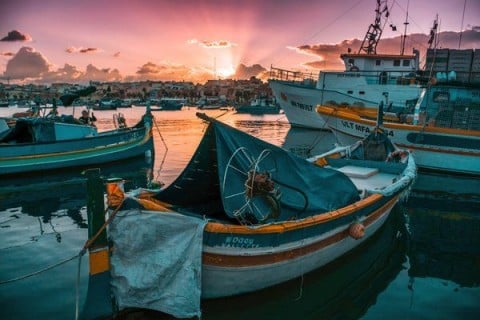
Traditional fishing villages are popular places for tourists and visitors looking for authentic portraits of which fishermen, fresh fish and seascapes are involved. This is seen by the tourism sector as an opportunity to promote marine and coastal destinations, offering a range of experiences that are linked to the fishing traditions of marine heritage. Tourism has the potential to “strengthen identities and regenerate local heritage”, in which local products, festivals, culinary and job-related skills find in tourism an opportunity for their preservation, stimulating sustainable development. Alternative opportunities are possible to gain additional income through innovation and diversification, e.g. by creating synergies between traditional sectors and tourism. Other economic returns of tourism are possible. For example, governments see it as a tool in rural development which can help to stimulate economies in danger of decline. After 2000s, Marsaxlokk (south-east of Malta) experienced an important influx of tourists by international tourists from cruises and mass tourism because of the promotion campaign from the tourism authority to brand Marsaxlokk as the only fishing village left in Malta. As tourism in Malta was expanding, the village has been in a constant transformation. Since the development in the north has reached its limit in recent years, the less developed areas in the south...
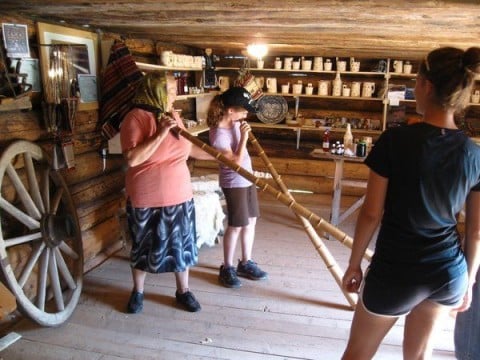
In the heart of Transylvania, Romania lies a mountain area that is still little known: the Apuseni Mountains (the "mountains at the sunset"), also known (in geography books) as Western Carpathians. These mountains are a world unto itself. Comprising a large variety of geographical forms, not very high (the highest peak is 1849 metres asl) but with impressive karstic landscapes and traditional livelihoods, hosting a rich fauna and flora, they are unique in Romania and, in many respects, in Europe. The local, native inhabitants are called Motzi and they live here permanently, in smaller or larger hamlets, some of them situated even at altitudes of over 1600 metres. The landscape of these mountains is among the last forested karstic landscapes in Europe. Caves, potholes, sinkholes, gorges, karstic glades covered mainly conifer but also deciduous forests. Casa de Piatra ("Stone House") is a remote hamlet somewhere in the heart of these mountains, in a picturesque valley limited by rocky walls and surrounded by conifer forests. Life was always harsh here, with long lasting winters, lots of snow till late spring and with short summers. Very few vegetables, almost no fruit (except wild berries and mushrooms). Fortunately, there are pastures with high natural value (given also...
For visitors to Thessaloniki, a densely populated city brimming with cultural treasures, it is always a pleasant surprise to learn about natural treasures nearby, such as the Axios Delta National Park, located just 25 km from the city's centre, considered as one of the most important wetland systems in Europe! A sizeable area of 338 km² is protected under the Ramsar Convention and included in the European Union Natura 2000 network of protected areas, serving as a permanent or temporal habitat for over 700 animal and plant species, many of them being rare or endangered. Even though a degraded area, since the 00s local people and authorities from the nearby villages have positively contributed towards a sustainable tourism model. Nowadays, there is a variety of businesses helping to preserve the area while benefiting from it. Tourists can enjoy a ride on horses, taste local delicacies such as mussels and deserts made with buffalos' milk, climb atop the numerous birdwatching towers, visit the wildlife care centre, go on hiking or cycling on the specially designed routes, and educate themselves. The living standard and economy of adjacent areas' residents has risen significantly thanks to eco-tourism development, thus, future investments appear to be aimed towards an even more ecological-minded...
Does the sudden demise of Thomas Cook, two years after that of Monarch, another tour operator-airline, signal the end of the era of the giant, mainstream tour operator hit by the giant internet meteorite? Is it a welcome step away from concentration (Thomas Cook having merged with MyTravel in 2007 to create a European 'giant') towards economic democracy,or just a shift from the high street chain, where now only a small minority purchase their holidays, to bookings through Online Travel Agencies/platforms and, to a lesser extent, directly through provider's social media and websites? Thomas Cook's rivals such as TUI, do not seem to suffer from such problems as they are vertical companies that own their accommodation, so it is too soon to say, if Thomas Cook's demise is part of a broader trend of socioeconomic significance. Other factors at play, according to analysts were Brexit-related uncertainty and the devaluation of sterling it caused (which probably was the last straw for the company that had nearly went bust as early as 2011). The shift away from sun and sea packages towards city breaks, encouraged by Airbnb-style supply and cheap airlines such as Ryanair and easyJet was also pivotal. In the meantime, the UK...