
By Patrick Mills, ECOCLUB.com Correspondent
About the Author:
|
The promotion of pro-poor and community-based development programs can warrant guidance and support ensuring that tourism benefits are retained by local communities whilst, all-the-while aiding, in the protection of their local environment and native traditions. In the island of Flores, Indonesia, pristine environments and unique customs and cultures are under threat from a steady rise in tourist numbers. Fortunately there are a number of organisations who strive to support the sustainable development of tourism in Flores. Eco Flores Foundation (EFF), a volunteer organisation, is supporting Flores’ remote communities, offering free knowledge and guidance on community-based tourism development. This article looks into EFF’s recent tourism development program, the Flores Homestay Network (FHN), and how EFF is providing the Flores inhabitants with the information and support needed to face the challenges as well as reap the benefits brought through tourism.
Figure 1: Map of Flores Island, Indonesia.
Part of the East Nusa Tenggara region (see Figure 1), Flores resonates with ancient traditions preserved over the last 1,000 years despite Bimanese, Portuguese and Dutch colonialism as well as a brief Japanese invasion. Since Indonesia’s colonial revolution in 1946, some islands have experienced rapid development whilst others have seldom received any benefits over the decades. Until today, Flores is still one of the poorest islands in Indonesia’s archipelago, its inhabitants having minimal access to services such as electricity, water, transportation, health care, balanced diets, and education. Currently East Nusa Tenggara has the third lowest human development index in Indonesia (Ministry of Industry - Republic of Indonesia, 2012).
From the 1970’s onwards, the islands of Java and Bali became popular tourist destination famous for surf culture, ancient temple structures and vast high rising volcanoes. Yet most of Indonesia’s Island, including those lying in the east, like Flores, were very much kept in their shadow. Over the years the tourism market has spread and Flores has become an increasingly visited destination, growing popular at first, due to its close proximity to Komodo Islands, the famous World Heritage Site and home of the Komodo dragon. Tourism numbers are still relatively low compared to Java, Bali and even Lombok, but Flores seems to be on the up. As part of Indonesia’s 2017 tourism development targets, Flores has been chosen as one of 16 priority destinations for future tourism development (www.rnrmarketresearch.com). The Indonesian government is currently receiving funding from large organisations such as the Swiss government and even the United Nations, in an effort to market Flores as a popular cultural and nature orientated tourism destination (www.florestourism.com) and in September, 2014, International Ecotourism Business Forum (IEBF) participants visited Flores’ potential attractions under the promotional theme “Nature, Culture and People” (www.indonesia.travel.com).
Tourist visits to Flores doubled from 2005-2010 (www.eturbonews.com), and tourism facilities are quickly developing at key destinations to better cater for tourists. The development of the trans-Flores highway, an almost 700km long road traversing the island, has allowed for tourism to spread, creating a safe and comfortable route to what were once hardly accessible destinations such as Bajawa’s Gunung Inerie, the largest volcano on Flores, as well as Mount Kelimutu National Park, the famous three crater lakes.
It seems that tourism will only be increasing in the next few years and with it most likely will come adverse effects, already affecting other parts of Indonesia. Tourism’s adverse effects are indeed already apparent in the island’s western port town of Labuan Bajo. A popular gateway to the island, Labuan Bajo is also the closest town to Komodo National Park and has suffered greatly from tourism development - often in the hand of foreign investors - in the last ten years, falling victim to the uncontrolled sale of land, hotel overdevelopment, inflation, and ever growing waste volumes. Currently there are plans for the expansion of Labuan Bajo airport in 2015, allowing international flights directly to Flores, bypassing both Jakarta and Bali. Consequently, Flores may most likely experience a rise in tourist numbers in the following years. As a comparison, the Island of Lombok’s international airport opened in 2010 and has since experienced a growth of 374% in tourist arrivals (www.indonesia-investments.com). The social, environmental and economic effects of tourism currently upsetting Indonesia are now posing a risk to remote islands such as Flores and it is ever more important for local, national and international organisations to assist the people of Flores in preparing for the potential impacts of tourism. Tourism development is inevitable in Flores, however there is a chance for it to be developed and managed appropriately to best cater for the local communities’ needs without putting their cultures, traditions and surrounding environment at risk.
Negative tourism impacts currently affecting IndonesiaOften tourism development in LEDCs suffers from a lack of appropriate monitoring posing social, economic and environmental threats that primarily affect the poorest population. Below are some of the impacts that currently affect Indonesia as a whole and pose a threat to Flores. |
Land LossThe sale of property is a common problem in up and coming tourism destinations. Investors, both domestic and foreign, are often looking to purchase cheap land for hotel development. Although not legally possible for foreigner investors to purchase land for commercial use, this can be done in assembly with an Indonesian citizen (www.indonesiarealestatelaw.com). Local inhabitants have been known to be tempted into selling land when offered large sums of money. Upon realisation of the potential economic benefits of retaining land some may wish to re-purchase their land often with no luck. |
Sex tourismOver the last 10 years there has been a steady rise in sex tourism in Bali facing a high demand from primarily Australian tourists. |
DrugsIndonesia’s strict rules on drugs have had little impact on the rising crystal methamphetamine drug problem. Sold to tourists in party islands such as Gilli “T”, Lombok, it is not uncommon to find many locals under the effects of the drug by night and holding a full time job during the day. As Flores becomes a popular addition to tourist’s itinerary (currently there are a number of boat trips that take tourists from the Gilli Islands directly to Labuan Bajo) demand for the highly addictive drug may also spread to the eastern island. |
Gender rolesIndonesia’s 2011 Gender Inequality Index score placed it in 90th place out of 135 countries (http://genderindex.org/country/indonesia). This score is based on a combination of lower income rates; high unemployment rates (both in labour and formal sector) as well as fewer years of education. Women in rural areas such as most of Flores often bear the weight of the triple burden, where they are expected to be in charge of domestic tasks (cooking and taking care of children), employment tasks (farming as well as crafts etc.) and lastly to perform tourism activities. |
Waste volumesBali, once known for beautiful pristine environment is now reknown as one of the most littered islands in the world. Caused both by locals littering, as well as the massive waste volumes brought through mass tourism consumption southern Bali waste volumes equates to almost 240 tonnes a day (http://www.rolefoundation.org/wastecrisis/). Waste volumes are already massively affecting the busier parts of Flores; Labuan Bajo and Maumere. |
Flores Homestay Network
A thirst for new experiences and traditional activities has expanded the tourism market to increasingly remote destinations and communities. Tourists travelling to Flores with a desire to see more than Komodo National Park are often interested in the more creative and cultural experiences that the island has to offer. These are visitors who wish to engage in authentic activities, gaining a better understanding of new places, the people, and their culture and heritage. As such tourists are now expecting a product that remote communities are in a position to provide them and in which they can reap most, if not all of the tourism benefits.
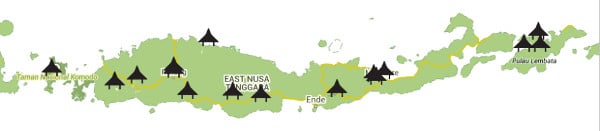 Flores Homestay Network Communities
The EFF Flores Homestay Network (FHN) strives to provide local communities with the knowledge and support on the benefits of community-based tourism (CBT) with the end goal of having these communities sustainably manage their own tourism products independently. CBT is used as a developmental tool that provides remote, often alienated, communities, with the opportunity of inclusion in tourism benefits as well as giving them tools and knowledge to curb tourism’s potential negative impacts. The FHN works with communities providing valuable guidance and support on how best to cater for guests ensuring that both them and the hosts get as much as possible out of the experience.
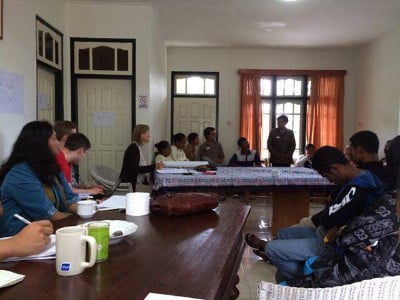
July, 2014, Flores Homestay Network Workshop
A free three-day workshop organised by EFF runs each year, whereby 1-2 representatives of each community are asked to join. During these workshops, community representatives, along with the help of tourism experts and volunteers, discuss the project as a whole and how best to manage it. This includes learning how tourism can affect communities’ social and cultural lives with the ultimate goal of providing them with the ability to evaluate themselves against relevant principles and benchmarks. These benchmarks were created by Dr Stroma Cole and offer guidance on how tourism can be managed in a manner that promotes a healthy community through aspects such as social cohesion and equality, as well as offering direction in preventing potential negative socio-cultural impacts such as loss of cultural identity, exploitation and gender inequality. With this information, workshop members work together and establish what is expected of those involved in the FHN. Matters such as standardised prices, host and guest expectations and minimum standards are discussed and set for all members of the FHN to adhere to. This form of bottom-up participation and decision-making ensures that the standards of the project are fully in tune with the local communities’ sentiments.
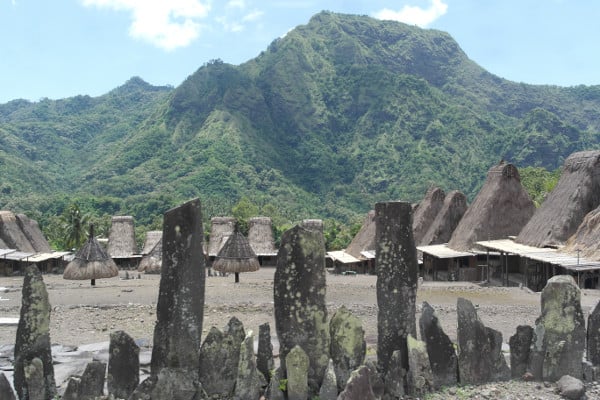
Village of Gurusina, Bajawa. Flores. Indonesia.
After the main FHN workshop, representatives are expected to share what they have learnt with their fellow village members with the help and support of volunteers. EFF relies on Tourism Geography and Tourism Management graduates (University West of England, United Kingdom), such as your correspondent, to work as volunteers, helping deliver the program to remote communities. Eco-Flores volunteers are professionals, expected to learn the local language, cultures and traditions. During their time with a community, volunteers conduct workshops providing support on the development of homestays and local tourism products, as well as discussing important topics concerning tourism development. Throughout their stay, volunteers build a comprehensive report based on Dr Stroma’s benchmarks which are later used to monitor the communities’ progress.
The FHN appeals to communities by providing them with a free online marketing platform for homestays (see www.floreshomestaynetwork.com). In exchange for this promotional technique the FHN expects communities to meet a minimum criterion (e.g. mosquito net, septic tank, toilet paper, private room) decided and approved during the FHN workshop by the communities. It also expects that the communities use the indicators and benchmarks discussed during the workshops to develop tourism sustainably. Workshop benchmarks tackle issues such as social cohesion and inclusion and gender equality and focus on allowing all community members to have an equal participation in the tourism development decision making process. The FHN warrants communication between community members and ensures that tourism becomes an asset for the entire community allowing for tourism ideally to be shaped and managed according to the majority’s wants and needs.
The FHN has been running for a little more than a year and current volunteers are very much pioneering the project. There are presently 15 communities involved and at this stage of the project only a few have had follow up evaluations. As such it is hard to tell whether communities are following many of the topics discussed during the workshops, including meeting the minimum criterion. In the future guest reviews, in the form of feedback forms, will be a valuable way for communities to evaluate themselves against guest expectations. At this stage these are still scarce, however over the next peak-tourist season (beginning in May) the FHN is expected to receive a high number of visitors and with them more constructive reviews. Likewise forthcoming evaluations will display in detail to what extent the FHN communities are using the lessons learned through the workshops to develop and manage tourism responsibly.
It is expected that a majority of visitors who take an interest in the FHN are hoping to experience the authentic and to interact with and learn unfamiliar cultures and traditions. Therefore the homestay itself should be perceived not only as accommodation but as a place where guests are expected to engage in aspects of local life taking part in social activities alongside the host family such as cooking and feeding the farm animals. Other activities such as blacksmithing, pottery, thatching and weaving are usually available with other members of a community. Hosts are also expected to share economic benefits locally by purchasing local products such as food. This practice of tourism provides a healthy dialogue between hosts, guests and other members of the community allowing for reciprocal cultural interactions and shared economic benefits.
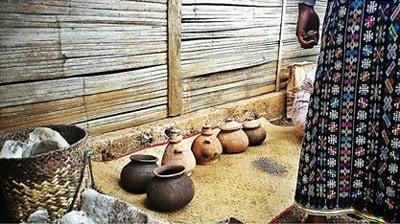 Pottery lessons, village of Pusut, Tado Territory. Flores, Indonesia.
All communities involved in the project adhere to a standardized price for accommodation whereby guests pay IDR 100,000 (roughly USD 10) per night, breakfast included. This prevents price competition between communities. Prices for activities and crafts, however, may change and the EFF asks communities that these prices be transparent and consistent. In an effort to monitor this, up-to date prices are publicised online for the guests’ attention.
The following EFF FHN workshop promotional video from July 2014 provides a sneak peak at the some of the communities currently involved in the project.
Conclusion
The CBT ideal as professed by the EFF through the Flores Homestay Network allows for a number of remote communities in Flores to gain a valuable understanding on tourism development. With this information communities are equipped with the tools to manage a tourism product responsibly as an additional economic resource. The Indonesian government has acknowledged the importance of this approach to tourism development. In December 9, 2014, a meeting at the Ministry of Tourism in Jakarta established a shared vision between various stakeholders in Flores whereby ecotourism and community based tourism development have been recognised as a fundamental approach to; preserving the social and cultural heritage of Flores, the control of assets by local communities, environmental protection and the promotion of gender equality. It was further agreed on the need to focus on the further development of the Flores Homestay Network through stakeholder collaboration. In a time where Flores tourism will no doubt be growing, it is vital that local communities understand where the control over this tourism lies, understanding first-hand the potential benefits as well as the risks that tourism may pose to the environment, culture and traditions.
The Eco Flores Foundation is looking for volunteers to help carry on the Flores Homestay Network Project in 2015. If interested, please contact Dr. Stroma Cole on
If interested in gaining a deeper insight into tourism development, globalisation and cultural change in non-western marginal communities, Dr. Stroma Cole’s work is available for purchase.
References
Govt. publication, REPUBLIC OF INDONESIA, Facts and Figures 2012 In-text: (Republic of Indonesia, 2012)
Bibliography: www.kemenperin.go.id/download/2971
ANON In-text: (Anon, 2015)
Bibliography: Anon, (2015). [online] Available at: http://www.stopdemand.org/afawcs0153418/CATID=3/ID=71/SID=587978889/Australia/Bali-Child-sex-network-hits-Bali.html [Accessed 4 Jan. 2015].
ATIMES.COM Asia Times Online :: Southeast Asia news and business from Indonesia, Philippines, Thailand, Malaysia and Vietnam In-text: (Atimes.com, 2015)
Bibliography: Atimes.com, (2015). Asia Times Online :: Southeast Asia news and business from Indonesia, Philippines, Thailand, Malaysia and Vietnam. [online] Available at: http://www.atimes.com/atimes/Southeast_Asia/GI03Ae01.html [Accessed 4 Jan. 2015].
ETURBONEWS.COM - ICTP Member Flores holds conference Flores Island: a case for sustainable development based on ...In-text: (Eturbonews.com, 2015)
Bibliography: Eturbonews.com, (2015). ICTP Member Flores holds conference Flores Island: a case for sustainable development based on .... [online] Available at: http://www.eturbonews.com/28685/flores-island-case-sustainable-development-based-tourism [Accessed 4 Jan. 2015].
FLORESHOMESTAYNETWORK.COM - Flores Homestay Network In-text: (Floreshomestaynetwork.com, 2014)
Bibliography: Floreshomestaynetwork.com, (2014). Flores Homestaynetwork |. [online] Available at: http://www.floreshomestaynetwork.com [Accessed 4 Jan. 2015].
FLORESTOURISM.COM - Swiss Government to provide Rp 45 billion for Flores Tourism In-text: (Florestourism.com, 2015)
Bibliography: Florestourism.com, (2015). Swiss Government to provide Rp 45 billion for Flores Tourism. [online] Available at: http://www.florestourism.com/news/swiss-government-provide-rp-45-billion-flores-tourism [Accessed 4 Jan. 2015].
GENDERINDEX.ORG - Gender Equality in Indonesia | Social Institutions and Gender Index (SIGI) In-text: (Genderindex.org, 2015)
Bibliography: Genderindex.org, (2015). Gender Equality in Indonesia | Social Institutions and Gender Index (SIGI). [online] Available at: http://genderindex.org/country/indonesia [Accessed 4 Jan. 2015].
1d5920f4b44b27a802bd77c4f0536f5a-gdprlock.AU - Google Maps In-text: (1d5920f4b44b27a802bd77c4f0536f5a-gdprlock.au, 2015)
Bibliography: 1d5920f4b44b27a802bd77c4f0536f5a-gdprlock.au, (2015). Google Maps. [online] Available at: https://www.1d5920f4b44b27a802bd77c4f0536f5a-gdprlock.au/maps/@-7.1726823,118.7893998,6z [Accessed 4 Jan. 2015].
HUMANTRAFFICKING.ORG - HumanTrafficking.org | Indonesia - In-text: (Humantrafficking.org, 2015)
Bibliography: Humantrafficking.org, (2015). HumanTrafficking.org | Indonesia. [online] Available at: http://www.humantrafficking.org/countries/indonesia [Accessed 4 Jan. 2015].
INDONESIA REAL ESTATE LAW - Principles of Agrarian Law - In-text: (Indonesia Real Estate Law, 2013)
Bibliography: Indonesia Real Estate Law, (2013). Principles of Agrarian Law. [online] Available at: http://www.indonesiarealestatelaw.com/2013/10/31/principles-of-agrarian-law/ [Accessed 4 Jan. 2015].
INDONESIA.TRAVEL - Wonderful Indonesia - The International Ecotourism Business Forum 2014, Flores In-text: (Indonesia.travel, 2015)
Bibliography: Indonesia.travel, (2015). Wonderful Indonesia - The International Ecotourism Business Forum 2014, Flores. [online] Available at: http://www.indonesia.travel/en/news/detail/1435/the-international-ecotourism-business-forum-2014-flores [Accessed 4 Jan. 2015].
INVESTMENTS, I. - Foreign Tourist Arrivals to Indonesia Jump 22.6% in January 2014 | Indonesia Investments - In-text: (Investments, 2014)
Bibliography: Investments, I. (2014). Foreign Tourist Arrivals to Indonesia Jump 22.6% in January 2014 | Indonesia Investments. [online] Indonesia-investments.com. Available at: http://www.indonesia-investments.com/news/todays-headlines/foreign-tourist-arrivals-to-indonesia-jump-22.6-in-january-2014/item1716 [Accessed 4 Jan. 2015].
Bibliography: Republic of Indonesia, (2012). Facts and Figures 2012. Jakarta: Ministry of Industry, pp.09, 45.
RNR MARKET RESEARCH, H. - Travel and Tourism in Indonesia to 2017 – RnR Market Research - In-text: (RNR Market Research, 2015)
Bibliography: RNR Market Research, h. (2015). Travel and Tourism in Indonesia to 2017 – RnR Market Research. [online] Rnrmarketresearch.com. Available at: http://www.rnrmarketresearch.com/travel-and-tourism-in-indonesia-to-2017-market-report.html [Accessed 4 Jan. 2015].
UNODC.ORG - Crystalline methamphetamine now Indonesia's "primary illicit drugs threat", UNODC says - In-text: (Unodc.org, 2015)
Bibliography: Unodc.org, (2015). Crystalline methamphetamine now Indonesia's "primary illicit drugs threat", UNODC says. [online] Available at: https://www.unodc.org/indonesia/en/2013/02/ats-report/story.html [Accessed 4 Jan. 2015].
WEB.WORLDBANK.ORG - East Asia & Pacific - World Bank and Gender in Indonesia - In-text: (Web.worldbank.org, 2015)
Bibliography: Web.worldbank.org, (2015). East Asia & Pacific - World Bank and Gender in Indonesia. [online] Available at: http://web.worldbank.org/WBSITE/EXTERNAL/COUNTRIES/EASTASIAPACIFICEXT/0,,contentMDK:23192849~pagePK:146736~piPK:146830~theSitePK:226301,00.html [Accessed 4 Jan. 2015].