
ecological tourism community & consultancy
ecotourism & sustainable tourism expertise since 1999

Ecolodge for Sale near Iquitos, Peru ecoclub.com/ecolodge-for-sale-peru-r260616

R260616-PE: Naturalia Retreat Center - Ecolodge for Sale - Peru - ECOCLUB®
Posted: 17 June 2026 Sale by: Owner Sale Price & Currency: USD 800,000 - Negotiable Property Name: Naturalia Retreat Center Property Address:...

As tourist dies from massive fire in sprawling Dominican resort, part of major hotel chain, but "independently owned" (to minimize exposure?) one wonders about the quality of fire inspections conducted by the local authorities in poor countries keen on maximizing revenues and soft on foreign investors... www.reuters.com/world/americas/one-killed-hundreds…
One more cruel reminder that conservation and ecological tourism may not bring peace, but certainly need peace. Hopefully Mona Khalil's many friends and followers around the world will find a way to continue her important work for sea turtles in Lebanon. Why is it so easy for some to destroy those who try to save us? www.theguardian.com/world/2026/jun/20/mona-khalil-…
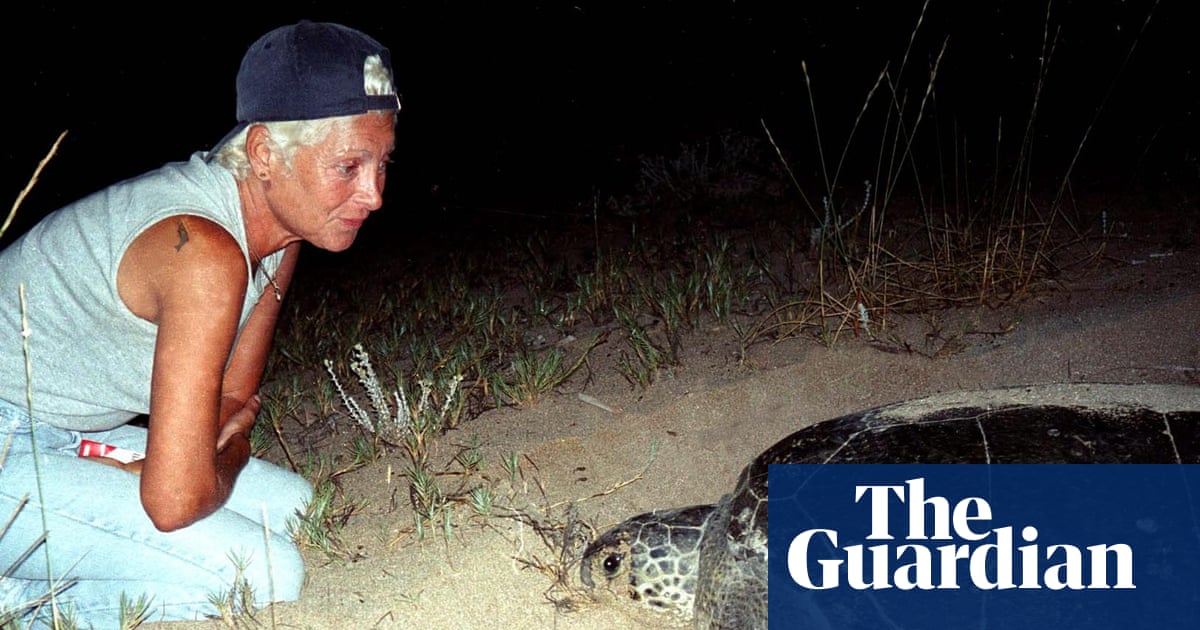
Israeli attack kills famed turtle sanctuary ecologist in Lebanon | Lebanon | The Guardian
Mona Khalil led decades-long effort to protect nesting site for turtles near her home in south of the country
Andros.ai is a new, quality chat-based guide for the island of Andros, Greece. I asked it various questions about hiking, birdwatching and upcoming festivals and the results were very informative, and presented in a user-friendly way, with maps. Let's see if it is a sign of things to come for other destinations, or if prospective travellers sticks to their own general-purpose AI. I also asked... Show more

Andros AI — Ask Anything About Andros Island, Greece
Your AI-powered island assistant for Andros, Greece. Ask about beaches, ferries, hiking trails, restaurants, hotels and local services — instantly.
When it comes to the use of AI tools by consultants in EU projects, the EU seems to have adopted a pragmatic approach: use it but declare it, what tools did you use and how exactly. There are also strict laws about what data you are (not) allowed to feed to public AI models. The EU Artificial Intelligence Act website offers more info. artificialintelligenceact.eu/

Under heavy US pressure, the Cuban parliament has essentially approved the reintroduction of capitalism, marking the end of an era, and not just for this large Caribbean island. The collapse of tourism was likely the last straw. One wonders what natural destruction will ensue from tourism development if the economy is rapidly liberalized in the next few years.
...
Show more
Interesting article by Professor Xavier Font et.al on the uses and effects of green accommodation taxes. "From eco-social intent to green growth drift: The governance of a sustainable tourism tax" www.sciencedirect.com/science/article/pii/S0160738… . The authors rightly argue that accommodation taxes need clear legal purpose, ring-fenced revenues, transparency and alignment with limits on... Show more
About 20 years ago (30 July 2006) the great Green political philosopher, activist and ecological social theorist and pioneer, Murray Bookchin passed away leaving behind a tremendous endowment of fresh ideas and future frameworks, in dozens of books and hundreds of articles and speeches. Influenced by the works of Kropotkin, among others, Bookchin methodically and exhaustively explored every... Show more

Will THIS be the future of hospitality? Presently, it is indeed just a marketing gimmick for fancy hotel reception desks, but soon robots could handle cleaning and preparing rooms - a difficult and poorly paid job and one of the hardest to fill post-pandemic. This could benefit workers by alleviating some physically strenuous work but some positions will be lost. Over the next decade some large... Show more

Robot suitcases, AI concierges — the future of hospitality?
Concierge robots and autonomous systems are increasingly entering hotels and airports. What still seems like a gimmick today could help solve staff shortages in the…
You cannot take Green politics out of Ecological Tourism. Otherwise, Necker Island, a billionaire's private resort would be called "ecological" because it has "three giant wind turbines". Perhaps Epstein's island did have some solar panels too? So, If you do not want to call such resorts green or ecological, you must explain why, and thus, Green politics. Who owns what, who bought what from... Show more
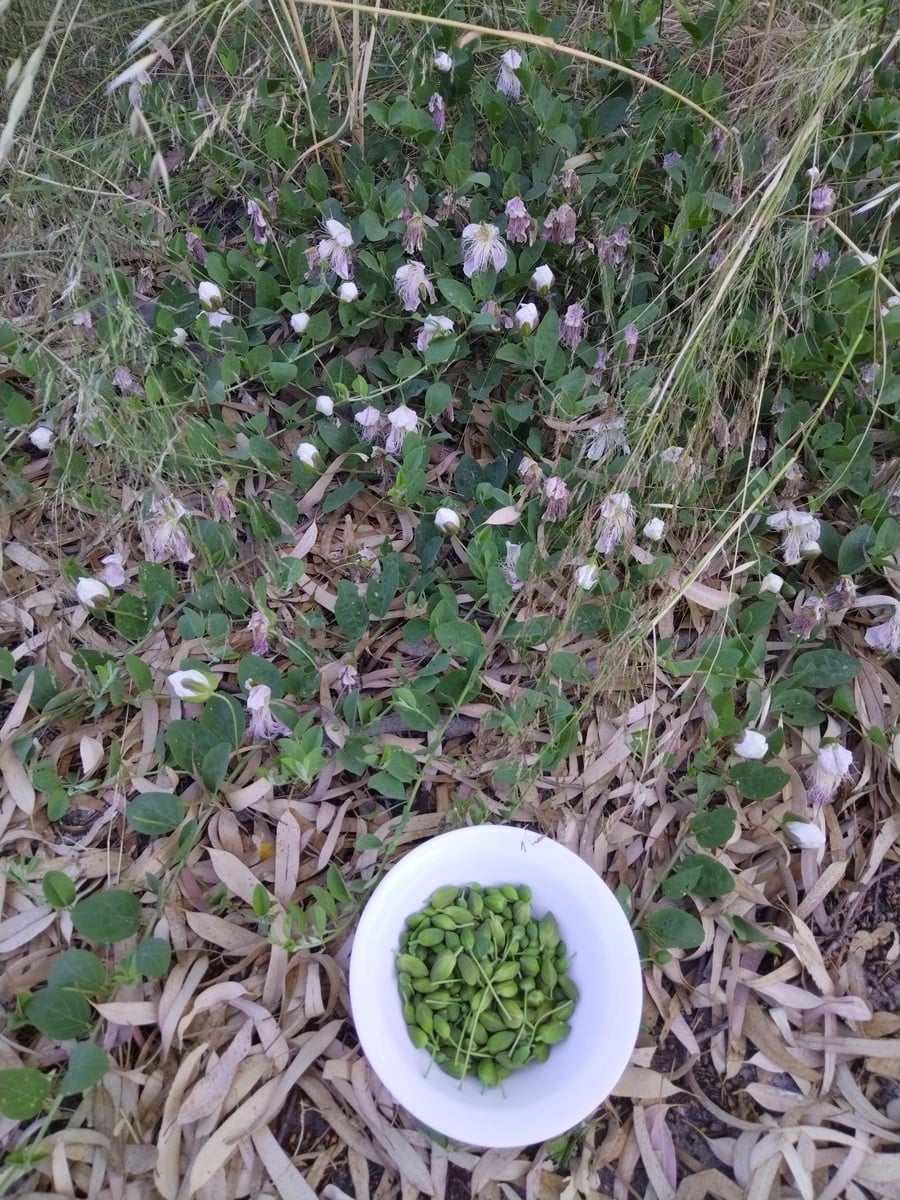
Caper: the flower you eat before it blooms! A key ingredient of Mediterannean dishes, the pickled flower buds of the caper bush (Capparis spinosa) are an antioxidant powerhouse, contain essential minerals such as copper and are a good source of vitamin K among other benefits. Before eating them from a jar, you only need to soak them for a few minutes in cold water to remove the excess salt. If... Show more
Free news services are fine -- some are even of higher quality than paid ones. Free news services that keep begging you, the reader, for money, because "they do not charge readers", "they do not have sponsors", "they do not really like money but somehow they need it" or for any other nonsense reason, are to be avoided.

Description
Activists from Thailand, Australia, Nigeria, the Netherlands, Ecuador, and the United States are the recipients of the prestigious, grassroots environmental 'Nobel' equivalent.
This 2022 winners are stated below along with a brief explanation of why they were chosen:
AFRICA: Chima Williams, Nigeria
In the aftermath of disastrous oil spills in Nigeria, environmental lawyer Chima Williams worked with two communities to hold Royal Dutch Shell accountable for the resultant widespread environmental damage. On January 29, 2021, the Court of Appeal of the Hague ruled that not only was Royal Dutch Shell’s Nigerian subsidiary responsible for the oil spills, but, as parent company, Royal Dutch Shell also had an obligation to prevent the spills. This is the first time a Dutch transnational corporation has been held accountable for the violations of its subsidiary in another country, opening Shell to legal action from communities across Nigeria devastated by the company’s disregard for environmental safety.
ASIA: Niwat Roykaew, Thailand
In February 2020, Niwat Roykaew and the Mekong community’s advocacy resulted in the termination of the China-led Upper Mekong River rapids blasting project, which would have destroyed 248 miles of the Mekong to deepen navigation channels for Chinese cargo ships traveling downstream. Flowing 3,000 miles from the mountains of Tibet before draining to the South China Sea, the biodiversity-rich Mekong River’s fisheries, tributaries, wetlands, and floodplains are a vital lifeline for more than 65 million people. This is the first time the Thai government has canceled a transboundary project because of the environmental destruction it would cause.
EUROPE: Marjan Minnesma, the Netherlands
In a groundbreaking victory, Marjan Minnesma leveraged public input and a unique legal strategy to secure a successful ruling against the Dutch government, requiring it to enact specific preventive measures against climate change. In December 2019, the Dutch Supreme Court ruled that the government had a legal obligation to protect its citizens from climate change and ordered it, by the end of 2020, to slash greenhouse gas emissions by 25% below 1990 levels. The Netherlands’ Supreme Court decision marks the first time that citizens succeeded in holding their government accountable for its failure to protect them from climate change.
ISLANDS AND ISLAND NATIONS: Julien Vincent, Australia
Julien Vincent led a successful grassroots campaign to defund coal in Australia, a major coal exporter, culminating in commitments from the nation’s four largest banks to end funding for coal projects by 2030. Because of Julien’s activism, Australia’s major insurance companies have also agreed to cease underwriting new coal projects. His organizing has produced a challenging financial landscape for the Australian coal industry, a significant step toward reducing fossil fuels that hasten climate change.
NORTH AMERICA: Nalleli Cobo, United States
Nalleli Cobo led a community coalition to permanently shut down a toxic oil-drilling site in her community in March 2020, at the age of 19—an oil site that caused serious health issues for her and others. Her community’s continued organizing against urban oil extraction has now yielded major policy movement within both the Los Angeles City Council and Los Angeles County Board of Supervisors, which voted unanimously to ban new oil exploration and phase out of existing sites.
SOUTH AND CENTRAL AMERICA: Alex Lucitante and Alexandra Narvaez, Ecuador
Alex Lucitante and Alexandra Narvaez spearheaded an Indigenous movement to protect their people’s ancestral territory from gold mining. Their leadership resulted in a historic legal victory in October 2018, when Ecuador’s courts canceled 52 illegal gold mining concessions, which were illegally granted without the consent of their Cofán community. The community’s legal success protects 79,000 acres of pristine, biodiverse rainforest in the headwaters of Ecuador’s Aguarico River, which is sacred to the Cofán.