
 About the Author About the AuthorPina Wu is an Environmental Services Professional based in Taipei, Taiwan. Her specialties include Urban Planning, Community Engagement and International Development. She has a Master in Public Policy and Urban Planning from Harvard University and an M.S. in Building & Planning from National Taiwan University. She currently teaches Environmental Education and English for Tour Guiding in Wenshan and Tainan Community Colleges. |
By Pina Wu, ECOCLUB.com Correspondent
Those who think of Taiwan as an agglomeration of crowded cities and bustling industries will be pleasantly surprised by its east coast with its diverse cultures, pristine beauty and rich biodiversity stretching 170 kilometres down the coast along the Pacific Ocean: sand and pebble beaches, shoreline reefs, inshore islands, and capes along with sea-eroded platforms, trenches and caves, idyllic fishing villages and rice paddies. The region is the homeland of the Amis, the most populous of the 14 officially recognised aboriginal tribes of Taiwan.
Endowed with rich natural and cultural resources, the east coast has been a target area for tourism development in the country. According to the official East Coast National Scenic Area Administration statistics there were over three million tourists in the region during 2014, 90% of whom were domestic tourists. Most visitors concentrate on famous sites, scenic areas, theme parks and stay in large hotels. Conventionally, the visitors come by tour buses that pass by the area in a few hours. Few stop to have a deeper encounter with the local culture and the natural environment. Only recently, when the concepts of “slow travel” and “deep tourism” became widely spread, independent travellers and tourists in small package tours show interest in venturing into the villages.
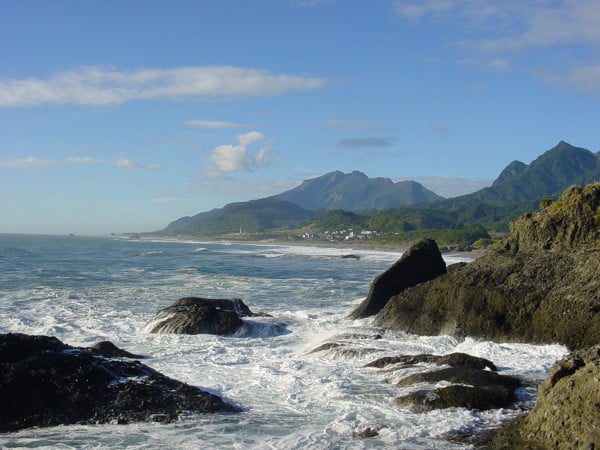
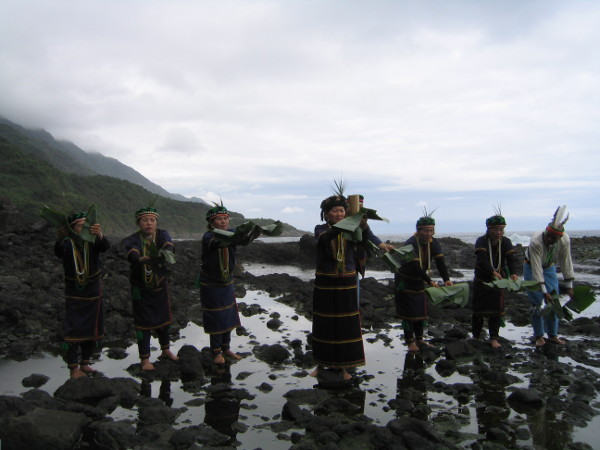 Makuta’ay village lies at the centre of the east coast like a well-kept treasure, an one and half hour driving distance from the nearest big city. According to the legend, Makuta'ay was one of the landing points for the Amis a tribe of Austronesian origin, when they migrated to Taiwan with their boats millennia ago. From here the people spread, and the culture flourished. Currently a total of 200,000 Amis reside along the coast and in the valley in the east of Taiwan. The indigenous people of Taiwan today account to only 2% of the total population. Among the many villages, Makuta’ay is considered one of the oldest village communities and recognised as having played a strong role throughout the Amis history. The village has a rigid, age-based social hierarchy. The males are divided into eight age groups that are responsible for specific tasks for the community. As a hub for the Amis culture, the village carries rich traditions in rituals and celebrations.
The settlement of Makuta’ay is small but endowed with rich ecological resources. To the east it is bounded by the Pacific Ocean; to the west rises the Coastal Mountain Range. The Siouguluan River in the south brings fresh water sources and is full of migratory fish. The Kuroshio current brings abundant marine life to the near shore. And the Coastal Mountain Range provides habitat for a rich diversity of flora and fauna. However, life in Makuta’ay has changed dramatically in the last hundred years with the introduction of Christianity, Japanese occupation and under the Taiwanese Han people’s government. The rice and taro (Colocasia esculenta) produced in the village are no longer competitive in the market while commercial fishing has crushed the local fishery. As a result the village population has dwindled with young people moving to the cities to look for employment. Few among the younger generation now speak Amis.
The government has long promoted tourism development in the region but most of the development required investment from external corporations. The Amis had few resources to develop tourism facilities and programs of their own until a few locals returned to the village in the late 1990s. They had experienced the city life and seen the outside world and had returned to seek their culture roots. They tried to revive the traditions and reinterpret them to the visitors. They also made use of whatever resources were available in the environment to create new cultural expressions. A man called Lahez was among these local artists and tourism pioneers and he found wisdom in the traditional Amis way of life. Lahez used driftwood from the beach as the material for his artworks. This attracted more local young people to come home to learn with him.
 Your correspondent first visited the village over ten years ago, as an assistant for a Tourism Planning project organised by the government. I arrived in the village in the night in a yard of a local’s house for a field trip. The moon rose from the sea. Four or five older people came in, they all carried small colourful baskets (in which there were betel nuts). They came to practice traditional songs. The breezes set in. A woman began to sing, and I was blown away by the unfathomed space that was evoked in her voice. Then in another song a man led, and the rest of the choirs responded with humming, it was as harmonious as the ocean waves. Only later on I found out that what I saw that night was not a spontaneous gathering but a deliberate result: the host, an elderly gentleman named Pudon, had paid the local equivalent of 3 US dollars to each of his neighbours so they would come. Pudon, who had also returned to the village after a long time living in the city, was hoping to develop a performance group of traditional shamanic songs and rituals. As not everyone shared his vision, he decided to cover the costs of training the group members by himself as an early investment. In this way, tourism in Makuta'ay developed slowly. Contrary to the common expectation that a community would or should develop its tourism in a coordinated or co-operative fashion, tourism in Makuta’ay developed in a diverse and decentralized way. Tourism programs are run by individuals out of their studios or homes. They are often strong characters who have persevered through the ups and downs of starting up and have developed their “niches”.
One of them is Sumi Runi, a charismatic woman with artistic talents, who revived the weaving traditions and began to receive visits by the artists from the city. The Necklace Studio, designed and built by two brothers using driftwood and cement carving techniques, is famous for its open space that blended in with the seashore. Many visitors come for coffee or just to relax by the sea for an afternoon. “Sawaluan” is run by the Podon family. The studio provides homestay, guided tours, weaving lessons, dance performance, and meals to the tourists in a homy environment. Liway, the manager, specializes in using open fire to prepare crabs and shrimps that he catches from the streams. “Neolian”, run by a couple, offers wood-carving workshops where you can learn how to make drums with driftwood.
Normally, the studios operate independently from each other. Only when they receive a booking from a large group staying for a longer period, will they reach out to each other and refer the visitors to other studios for meals or for activities. Each studio establishes its own media contacts and customer base and Makuta’ay has developed a very extensive tourism connections network in a short time. But this very decentralized model also makes each studio short of labour as each studio owner is busy with bookings, preparations and all the paperwork associated with tourism development. There is also competition for government funding. As I revisited the village over the years, I often heard that people would like to do something together as a community, but there is no stable structure or operational framework and they just continue to work on their own.
 Currently there are seven main studios in Makuta’ay, and at least five homestays that can take in small groups of visitors for accommodation. Makuta’ay attracts visitors who have an interest in exploring the nature and understanding the indigenous people’s culture. This includes a wide range of visitor types- independent travelers, families, working-holiday visitors and all age groups. Group visitors often come from NGOs, public sectors, community associations, travel agencies and schools. The majority of the tourists come for a one-day tour but every month studios receive one large group with over 40 people for a two-day program. The average rate is USD 120 per person for a two-day program.
Summer is the peak season, particularly the time of the Harvest Festival. In 2011, the Harvest Festival of Makuta'ay (which takes place in July every year) was designated as an Intangible Cultural Asset by the Cultural Ministry of Taiwan. But even during the slow season a small number of individuals and small groups visitors come to Makuta’ay in a steady stream. They linger of a meal, or join the guided tours to walk around the village. There are no precise statistics on the total number of tourists in Makuta’ay, but they are estimated to be around 1,500 to 2,000 annually.
In 2009, the Agency of the East Coast National Scenic Area announced plans to develop a multi-functional park project, with a performance venue, picnic area, and shops in the north side of Makuta’ay- five hectares of prime land with superb scenic beauty at Shi-ti Bay. The plan aimed to foster tourism development for the area and bring employment but it was met with strong local opposition and protests. It was actually this event that helped local people galvanize. The local people claimed that the land was theirs, farmland that historically belonged to over forty families, rather than public land that could be used by the government freely. They also disputed the government’s model of tourism development, tourism facilities built and operated by large corporations which often destroyed local diversity and reaped all economic gains. The locals wanted to have a say in shaping the area’s future development so that it continued to reflect their culture and improve the village’s well being.
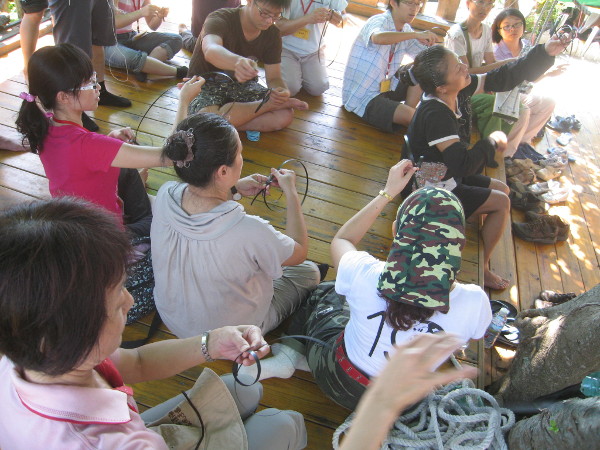 The protests went on from 2010 to 2012. The people of Makuta’ay protested on the street in front of the Presidential Hall in Taipei, joining forces with other “Reclaim the Land” movements of indigenous people, negotiated with governmental officials in the Legislative Yuan and confronted the bureaucracy in the local Township. The village was mobilized again and again. Finally, in 2013, the Agency of the East Coast National Scenic Area and the Save the Land of Makuta’ay Committee arrived at a compromise and decided to co-manage the land. The community is now entrusted by the government to formulate its own proposal for the land. And the government has promised to provide funding for that. Makuta’ay is pushed to develop a collective tourism scheme together. The co-management agreement between the Agency of the East Coast National Scenic Area and the Save the Land of Makuta’ay Committee is currently being drafted by local people, mostly led by the younger generation (Spring 2015). The local people are taking things in their hands, setting up a cooperative that will act as the managing body for tourism development for the future. Ideas such as “sustainable development”, “fair share”, and “cultural awareness” have been brought up, and the local people are finding ways to put the ideas into practice. When it is finalized, this may be the first case of co-management of tourism between the government and an indigenous community in Taiwan. The negotiation process has been transparent and the draft can be seen at the blog of Save the Land of Makuta’ay Committee. Lafay Chen, the Board of Director of Save the Land of Makuta’ay Committee said the process of negotiation has not been easy. It is especially difficult to have the landowners in the village to form consensus. “There is deep mistrust between the locals and the government. The elderly asked me, aren’t we going to fight for our land? Why do we sit down to negotiate with the government now?” It is not easy to convince the locals that co-manage the land with the government will be of best interests to them as they feel restricted by the regulations.
As most people are still struggling to make their ends meet, in the past ten years, many locals have already expanded studios, constructed new houses, and created parking lots to accommodate tourists. In regional public hearings some scholars and NGOs (Citizen of the Earth, Taiwan) have raised concerns. They urge for stronger government interventions in regulating the coastline development in the area as a whole. This creates conflicts with the local people. It is also not clear how tourism will impact the culture of the village. It will be a pity if the studios were becoming more and more just like other cafes, restaurants, and homestays in the city that serve only to satisfy the demand of the tourists.
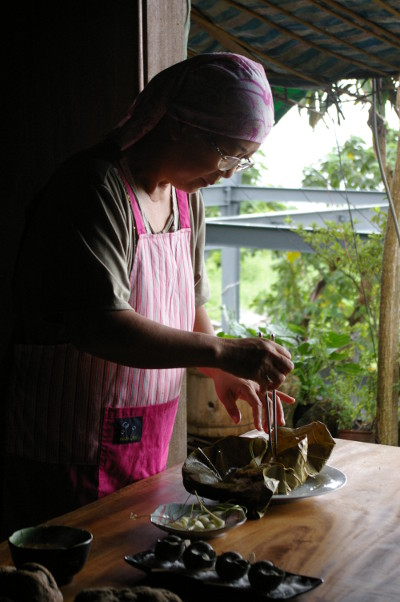
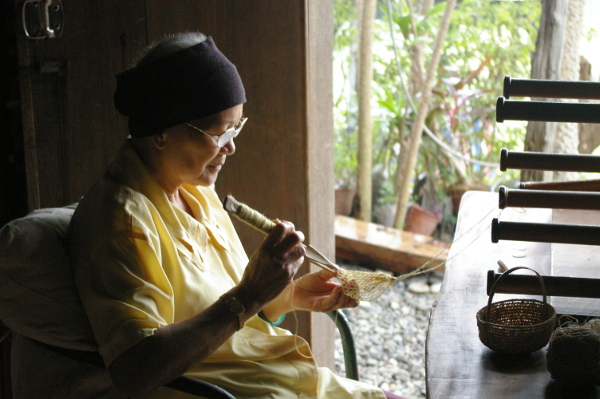
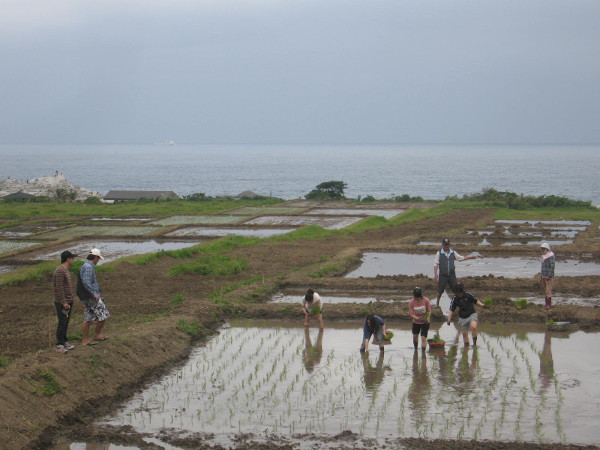 On the positive side, some studios are developing guided tours on local history and plants ecology. Visitors can also take classes in ramie fiber making and weaving. There are also farming programs. The village has recently replanted its rice paddles by the sea side. The project named “Ocean Rice” has attracted many visitors to come to participate in planting and to share the harvest. In 2012, Sumi Runi - owner of Fire Studio was awarded National Woman of Excellence on International Women’s Day for her work in rice field rehabilitation. Artists Iyo Kacaw and Sapod Kacaw receive regular exhibitions to museums, galleries, and international workshops. Anu Kaliting Sadipongan, a young musician at the village, won the prestigious Golden Melody Award in Taiwan with an album in 2014.
And there are more and more young people returning to the village. They make documentary films, have photo exhibitions, hold events and shows to express their indigenous identities and to discuss the local issues they care about. In recent years, numerous NGOs, well-known journalists, scholars and artists have visited Makuta'ay. They come to hear the story of Makuta’ay and to share their experiences. In this way, Makuta'ay seems to go beyond tourism, and become a site for learning, inviting people of different culture backgrounds to come together. Young people in Taiwan are more and more aware of issues such as indigenous people’s rights, land justice and sustainability. Since the Reclaiming the Land movement, Makuta’ay has become a hub for education that spoke of such issues with its own example. Small groups of students would come to visit, listening to the locals and learning about the issues first handedly. The village has become a field school. Throughout the east coast of Taiwan, many indigenous communities communities are disputing government-led tourism policies and are in search of a new development model. Among these communities, Makuta’ay plays as an important example, for it has a diverse range of capable local studio owners, artists, spokespersons who have strong cultural influences. Hopefully Makuta'ay will continue to serve as an example for other indigenous communities in the east coast, Taiwan.