Morocco is an internationally renowned travel destination, and rightfully so, this North African country boasts year-long sun, beautiful beaches and an impressive culture. With its close proximity to Europe, a mere 14km from the coast, Morocco has become an increasingly popular location for Europeans seeking an affordable yet exotic holiday. From 1912 to 1956, the country was a French protectorate and the French influence is still visible. The current King, Mohammed VI, is encouraging further relationships with the English speaking world and its businesses. In an effort to build this connection as well as develop general tourist relations in Morocco, the government initiated a tourism strategy in 2002 called Vision 2010. In a speech addressing the launch of the project, the King acknowledged tourism as a national priority. The initiative was implemented to encourage relations with foreign countries but also to deal with issues of unemployment and underdevelopment around the country. The project identified many ambitious improvements to be made all over Morocco within the next decade (Locum Destination Consulting: 2002). Tourism and hospitality are subsequently among the leading industries in Morocco today.
My research in Morocco aims to make sense of several important aspects of the relationships between foreigners and locals through the initiative of hospitality. Along with the incredible sights and variety of landscapes- guidebooks, blogs, travel and leisure magazines all rave about the friendly and embracing nature of the Moroccan people. Yet, in those same publications are warnings of the Moroccans equally ‘cunning nature’. Many experienced visitors of Morocco will advise you on rules of haggling, such as never pay more than half of what someone initially asks. You are told to expect being ripped off. This is especially true in the city of Marrakech, where the majority of my fieldwork took place. The Medina that marks the old city has few roads designed for cars and instead motor bikes and eager sellers flood the streets. The experience can be overwhelming for a first time tourist in the city, but somehow Marrakech continues to hold the love of foreigners who visit. Why is this? How does the Moroccan tourism/hospitality industry engage its visitors and win their loyalty? This essay explores these questions by looking closer into the riad's of Marrakech.
A riad is a traditional Moroccan house with an interior courtyard. These establishments are essentially boutique hotels and are most often family owned. One local guide reported that there are over 3000 riad's in Marrakech all of varying levels of luxury. On my recent trip to Marrakech I stayed at a riad centrally located within the Medina. The house boasted 11 spacious and well decorated rooms all furnished with antiques from the owners store. As with the other riad's we saw while in the city, ours was hidden down a nondescript alley with a simple door and a buzzer to announce our presence. Once inside there were two open courtyards that spanned three stories, an indoor pool, and several lounges. When we arrived on our first day in the city we were warmly greeted and brought to one of the lounges where we were asked to wait. As we waited and admired the displays of antiques and the beautiful architecture, the receptionist prepared the traditional Moroccan tea and several sweet treats for us which we enjoyed over a thorough introduction to the city. The receptionist gave us a map and took the time to chart out the best ways to explore the city and the easiest routes to get back. She patiently answered all our questions, giving us helpful advice and personal recommendations. Then she proceeded to explain the tours that were included in the rate for our room. The first tour was a day trip exploring the Atlas Mountains, a Berber Village, and a Berber Market. The second was a tour of the Souks within the Medina, which are essentially a maze of vendors selling goods ranging from leather to spices. Each tour was private, with only us and a guide, in order for us to have the flexibility to see what we wanted. The importance of flexibility and comfort was a resounding theme throughout our stay. We had planned a cooking class at another riad where some friends were staying for the following day, and the receptionist insisted it would be best to have our souk tour afterwards. She arranged for the guide to pick us up at the other riad so we could spend the rest of the day exploring the medina for the first time in good hands, being shown all the 'best places'. After figuring out the details of times and days the receptionist gave us a tour of the riad. We walked through the courtyards and up the stairs to the expansive roof with a dozen sunning chaises and seating shaded by white draped canopies. Then we were led back down to the ground floor and shown our beautiful room. Before leaving us, the receptionist told us that meals were not in any designated room. We were too call her at the front desk at least three hours before and she could arrange dinner or lunch anywhere we wanted, either the rooftop, one of the lounges, or our room. There was also no set menu. We were given suggestions but they would make whatever we wanted. Breakfast required only five minutes’ notice and they were again happy to bring that to whichever venue pleased us. The elaborate welcome, the atmosphere, and the generous and available staff, were all factors in the sense of ‘at-homeness’ experienced immediately in the riad.
In “Hospitality: A Social Lens”, O’Gorman explores the origins of hospitality, focusing mainly on Greek and Roman civilizations. O’Gorman found that hospitality began at home, and as the cities and nation-states grew so did the reaches of the expanding industry (O'Gorman: 2007: 17). Travelers today often find themselves much farther from home than the mere distance between cities. I for example, an American in Marrakech, was researching a continent away from my home. In order to find a loose central meaning from which to reference, I would like to take a moment to specify the meaning of ‘home’. Despite the numerous definitions assigned to the word ‘home’, the underlying sentiment is a sense of belonging, whether it is found in a place or people. Successful hospitality attempts to create an atmosphere in which the guests feel comfortable and at ease, essentially manufacturing the ‘at-homeness’ feel. Our riad was especially skilled at integrating us into our environment, the day trips and tours as well as the personal touch of the dining service worked to promote this sense of belonging.
Early in the exploration of the study, Smith (1977) defined the anthropology of tourism in terms of ‘hosts’ and ‘guests’. More recently, however, O’Gorman has described hospitality as “friendships and alliances between persons, between communities, and between nations.” This idea stresses the reciprocal duties of hospitality. Brotherton similarly suggests that hospitality reflects a “contemporaneous human exchange, which is voluntarily entered into, and designed to enhance the mutual well-being of the parties” (Brotherton: 1999: 165). To further illustrate the idea of hospitality as an exchange over a merely ‘host’ and ‘guest’ relationship, O’Gorman identifies five dimensions central to hospitality. The dimensions include: Honorable Tradition, Fundamental to Human Existence, Stratified, Diversified, and Central to Human Endeavor. Honorable Tradition implies that the terms ‘host’, ‘guest’, and ‘stranger’ are essentially coterminous without any important distinction. This dimension also suggests that alliances are built on continued mutual hospitality, and by providing accommodation and/or food for someone, the provider is paying homage to the gods. Fundamental to human existence describes the idea that after the original relationships are formed, eventually the alliance expands to include descendants and then friends of the initial parties involved. This ultimately establishes trust and loyalty. Stratified speaks to the increasingly codified provisions of the hospitality industry. Places of hospitality are often required to meet certain criteria legally or based on the norms of society, and within the management are roles with defined responsibilities. Diversified reflects on the idea that as the guests have become wealthier they have also become more equipped to afford a larger range of needs. Accommodation now seeks to satisfy as many of those needs as possible, and the product of that drive is a wide spectrum of ranging budgeted choices. Finally, Central to Human Endeavor describes the need for mutual exchange of not only goods and services but protection and alliances which are the result of hospitality. These elements civilize societies (O'Gorman: 2007: 28-30).
The notion of belonging, although manifested in different ways, is the common theme represented in O’ Gorman’s dimensions. Despite the role of ‘host’ ‘guest’ or ‘management’, each party is rightfully included in the alliance of hospitality. Being a part of the alliance involves the inevitable benefit but also the inevitable debt. This process of exchange is described by Graeber in “On the Moral Grounds of Economic Relations: A Maussian Approach.” Graeber argues in favor of Mauss’ idea that “gifts operate out of transactional logic.” Any complex society that involves some sort of currency is open to every social possibility. Therefore, any complex society is capable of all possible models of exchange, but it is the dominant type of transaction that depends on the overriding cultural values and norms. Graeber describes three types of ‘fundamentally different moral logics underlying the ‘gift.’’ First is “communism”, which operates according to a balance of needs and abilities. The second is “exchange”, which is based on a back and forth process ultimately working for equivalence. The third is “hierarchy”, which describes the natural relations between superiority and inferiority (Graeber: 2010). For this essay, and in regards to Morocco, we are concerned with the second logic; “exchange”. Exchange is essentially a game based on future expectations. Both sides of the exchange keep count and either party can end the transaction. The transaction is not required, instead it is dependent on a socially expected response. Economists insist that parties work to get the most out of each deal; however anthropologists hold a different view. They believe that when dealing with the exchange of gifts, the transfer of objects reflects the organization of a relationship and the ability of both parties to participate. In concordance with the anthropological perspective, showing off and contests of generosity are the more likely reaction to gift giving (Graeber: 2010: 8-9). It is rare that any society practices only one of these three fundamental types of logics, as Graeber says it is “hard to imagine a society where people were not communists with their closest friends and feudal lords when dealing with small children” (Graeber: 2010: 13). However, for my purposes, I will be looking at Moroccan's and their relationships to visitors in the riads in terms of the dominating logic of Exchange.
As stated earlier in O'Gorman's dimensions, the idea of an alliance is central to hospitality. Successful hospitality results in a deeper relationship than simply that of the 'host' and the 'guest'. There are future expectations for the visitor to return, or to recommend the establishment, and more abstractly the implication of role reversal. Role reversal does not necessarily mean the individual 'guest' becomes the 'host', but rather it speaks to the forged relationship between nationalities and the expected reciprocal treatment in the foreigners country. In Marrakech, the role of the riad is an elaborate mechanism underlying the foundation of these relationships and alliances between visitor and local. Riad's within the Medina are the ideal location for tourists looking for ease of access to the excitement of the city center. They are also the tourist's best contact and source of information, which gives the riads the power to direct their guests to whichever establishments they choose. Guidebooks and word of mouth can be influential, but the members of the riad are locals with personal recommendations and most importantly they are trusted by the visitor. At least some basic and fundamental trust is implicit in the act of accepting accommodation and food. Another aspect basic to this relationship is often language. In my case, English being my only language, I relied heavily on the instructions and advice of the staff of my riad who thankfully also spoke English. Outside the riad however, many of the people I met either spoke no English, or only fledgling English that consisted mainly of phrases like “No, no what's your final price?”
The cooking class we took was an example of the riad's influence and its ability to extend relationships between tourists and other locals. After arriving at our friend's riad and deciding what meal we wanted to learn to cook, we were taken to a street lined with vendors selling vegetables, meat, fruit, bread, spices and anything else possibly needed to cook a Moroccan dish. The woman who was taking us shopping and would later translate our lesson, took us to all her preferred vendors. When asked why she chose each vendor specifically, whether it was based on price or quality, she said it was because she trusted these vendors and she knew them personally. We were introduced and later returned to buy food at the same vendors, because by this association we trusted them too. The tours included in our room rate are also an ideal example of the riads using this position of power to extend visitor relations with locals. In our tour of the souks, we had a western dressed guide who wore familiar brand names such as Ray Ban and Ralph Lauren. He picked us up from our cooking lesson and expertly navigated us through the narrow, crowded, and maze-like streets characteristic of the souks. Each section of the souks houses different goods such as textiles and spices. We passed vendors upon vendors each carrying identical looking products all the while our guide spouted out facts about the city. At each section he would stop to encourage us to look at a vendor of his recommendation. At these stops our guide would sit in the back happily laughing and talking with the sellers as we scoped out the inventory. Although this vendor would always look the same as the other hundreds surrounding, we would peruse for a period and often end up purchasing something, trusting the quality and the sellers based on our guide and indirectly our riad's trust of the seller. The tour of the Atlas Mountains and the Berber village ran in the same fashion. This time our guide was locally dressed. He took us to trusted restaurants that our 'American stomachs' could handle, and the 'best quality' berber carpet sellers. All the while he sat and talked with his friends. In the car and hiking up the mountain our guide would tell us about Moroccan life and the king. He described the people of Morocco as happy people. He made an explicit comparison to Algeria saying that despite their wealth of natural resources they are a poor country, in his opinion, because their people are unhappy. Our guide attributed this unhappiness to the government and their lack of presence in the peoples lives. “In Morocco”, our guide would say fondly, “our King is very active”. He described a promise made by the government that gives money to subsidize renovations in order to improve the standard of living. The money poured into these residences and schools are long term investments in the people for future generations. In return, the people are expected to work and do their part to increase conditions of the country. This notion of camaraderie so deeply ingrained in the structure of the country and the culture is contagious to visitors. That is not to say that visitors feel indebted to all Moroccan's, it is within their alliance with the riad and the extensions of the riad that this feeling emerges. As an equal party in the alliance, visitors are persuaded to follow the rules of exchange. On the 'free' tours although we were not required to make purchases, there was a pull to do so when we were in the place of friends of the guide. At the riad itself, although we could go out to eat and drink we were often inclined to stay in, not only to be in a place we felt 'at-home', but also because we wanted to express our thanks for such great accommodation by spending our money there rather than somewhere else.
In a final effort to illustrate this idea, I will employ the role of the Melanesian Big Man in a comparison. One important element of the Big Man status is that he is not directly political, yet has sway and influence amassed by his connections and loyal following of ‘lesser men’. This group of ‘lesser men’ as well as wives and other extensions makes up his faction, and as Sahlin says, the making of the faction is the true making of the Melanesian Big-Man. Establishing this basis of loyalty and obligation is vital not only for creating renown, but also for weaving an intricate web of relationships ready for the Big-Man to “capitalize by finessing the relation of reciprocity appropriate” (Sahlin: 1963: 291). In this sense, the role of the Melanesian Big Man is similar to the power behind the riad. The riad is at the center of these webs and the core of the alliance because it gains the trust of the visitors so key to the economy of Marrakech. As with the Melanesian Big Man, the riad is an indispensable force working towards supra-local organization. But more than that, the riad extends this alliance to include visitors, simultaneously fueling the economy and promoting foreign relations. Because of their cunning and economic calculation, Moroccan's acknowledge foreigners as important members of their alliances. Despite the doubtless self interest involved, an underlying truth is still the idea of equality in the alliance and the notion that each party is capable of participation in the transaction. The ideas of belonging and manufactured 'at-homeness' in the hospitality industry are all connected by the social mechanism of exchange which bonds the alliance and extends the relationship outside of the riad. By engaging visitors in all aspects of life in Marrakech, the riad's are a force of social integration.
References
Brotherton, B. Towards a definitive view of the nature of hospitality and hospitality management. International Journal of Contemporary Hospitality Management, 11(4), 165–173. 1999
Graeber, D. On the Moral Ground of Economic Relations: A Maussian Approach. Special issue of La Revue du Mauss. K. Hart (ed.), 2010.
Locum Destination Consulting. Eastern Promise: Cultural Tourism Opportunities in Morocco. London: Colliers International UK.
O'Gorman, Kevin D. Dimensions of Hospitality: Exploring Ancient and Classical Origins. Hospitality: a Social Lens. Compiled by: Conrad Lashley, Paul Lynch, and Alison J. Morrison. Amsterdam: Elsevier, 2007.
Sahlins, M. Poor Man, Rich Man, Big Man, Chief. Comparative Studies in Society and History, 1963.
 Gorda, Belize - 10 May 2011
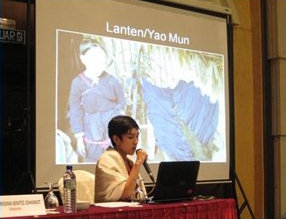 Luang Prabang, 15 April 2011
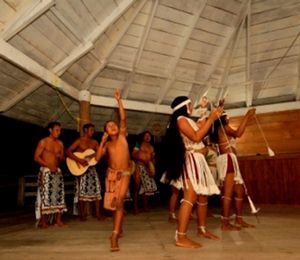 Vancouver, Canada, April 9, 2011 – Long time ECOCLUB.com Member Judy Karwacki of Small Planet Consulting (SPC) is thrilled that