by Pina Wu, ECOCLUB.com Correspondent
 About the Author About the AuthorPina Wu is an Environmental Services Professional based in Taipei, Taiwan. Her specialities include Urban Planning, Community Engagement and International Development. She has a Master in Public Policy and Urban Planning from Harvard University and an M.S. in Building & Planning from National Taiwan University. She currently teaches Environmental Education and English for Tour Guiding in Wenshan and Tainan Community Colleges. |
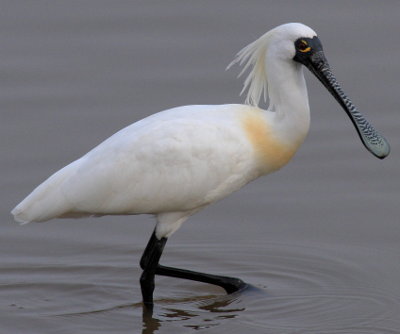 On January 13th, 2016, Taijiang National Park (Map) unveiled its newly completed administration office and tourist centre in Tainan, southern Taiwan. Three weeks later it withstood an 6.4 earthquake which killed 117 people and caused widespread damage particularly in Tainan. The building, in the heart of Sicao wetland, a Ramsar site, is an example of modern stilt architecture, built over the waters of a former fish farm. When visiting Taijiang, one appreciates a serene scenery: the tidal shore is dotted with mangrove forests, birds fly over the water in search of the day’s catch, local fishermen check their nets in the pond and women pick out oysters from their shells under the trees in the fishing villages. Few visitors can imagine or comprehend that twenty years ago, there were plans to develop an industrial zone with new townships, an oil refinery, a harbour and an airport in this very location. Those plans were only dealt a final blow in 2009, when Taijiang National Park was formally launched to protect the highly-endangered black-faced spoonbill. It has a total area of 39,310 hectares, of which 34,405 ha is covered by water. Taijiang NP was the eighth national park in Taiwan (out of a current total of 9) and the first that set the wetland ecosystems as the main conservation subject.
 By
By  By
By 

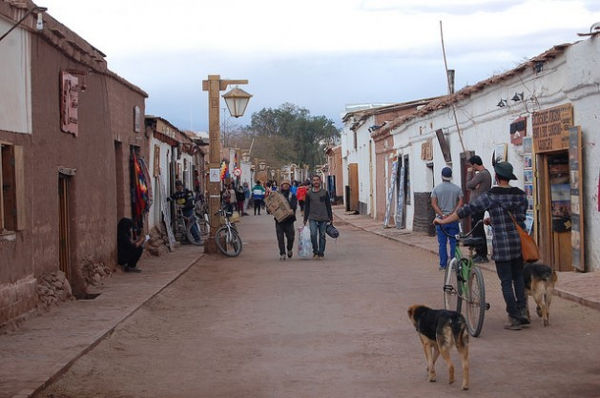 SAN PEDRO DE ATACAMA, Chile, Sep 22 (IPS) - Chile's Altiplano or high plateau region, pounded by the sun of the Atacama desert, the driest place in the world, is home to dozens of indigenous communities struggling for subsistence by means of sustainable tourism initiatives that are not always that far removed from out-of-control capitalism.
 By
By  September 7, 2015 (Bangalore, INDIA) - Today Wild Asia proudly revealed the winners of the ninth Wild Asia Responsible Tourism Awards. For the first time, the announcement and celebration was held at PATA Travel Mart, this year at Bangalore, India, and generously sponsored by World Nomads Travel Insurance. The Wild Asia Responsible Tourism Awards are an opportunity for shining stars in sustainability to gain international recognition for their efforts to create better places to live and better places to visit. The Winners represent leadership in commitment to benefiting their local communities and natural environment, whilst providing authentic and meaningful travel experiences for visitors from around the world. The Awards are based in the Global Sustainable Tourism Criteria, and all recipients go through an in-depth review and assessed by a panel of international travel industry experts.