In regard to the Tsunami just experienced, Hawaii was blessed not to have any damage. The wave was smaller than was expected. The direction that the wave was coming from did not have many warning buoys so it was difficult for the Tsunami Center to estimate, but they went with the most caution. I believe the highest water was by Kahului, Maui Island, Harbor at 2 1/2 feet. People were very good about evacuating but some areas had traffic congestion that hampered the evacuation. There are directional signs being put in place to tell people where to evacuate or if they are in a safe area. And this will help correct the problem of traffic congestion. Plus, there is a new policy for the hotels near the beach, to only evacuate guests to higher floors. The warning was a concern to begin with as the 2011 Tokyo Tsunami did some extensive damage on all Islands, on all sides, because of what is called a wrap around wave. Especially in the harbor areas. In some areas on all Islands, the sirens did not go off and the state is extensively investigating what might have happened. Part of the problem was that the...
ECOCLUB Blogs™
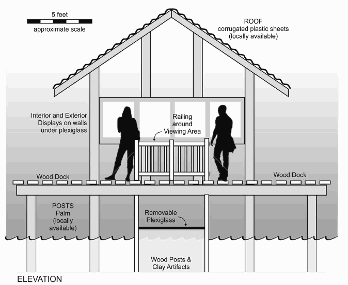
Paynes Creek National Park in the Toledo District of southern Belize, is home to the only known Classic Maya wooden structures – whilst wood and other organic materials don’t usually survive, the waterlogged environment at Paynes Creek created unique preservation conditions, giving a rare glimpse of how the ancient Maya used timber. A three‐year project, led by Louisiana State University Professor, Heather McKillop, will see the construction of an observational platform in Paynes Creek National Park. Visitors will be able to observe the underwater archaeological site through a window in the platform without any risk of damaging the remains. As part of the project two exhibits were opened – one at the Tourism Information Centre on Front Street, which includes a Maya canoe paddle, and the second at the TIDE Ranger Station in Paynes Creek. These exhibits, in conjunction with a series of workshops and talks, are designed to raise awareness of this unique Maya site, and will be expanded periodically, A website for archaeological tourism is also planned. When and where? Visit the exhibit at the Toledo Tourism Information Centre during opening hours, Monday to Friday 8am to 4pm, or visit Paynes Creek National Park through http://www.TIDEtours.org, email
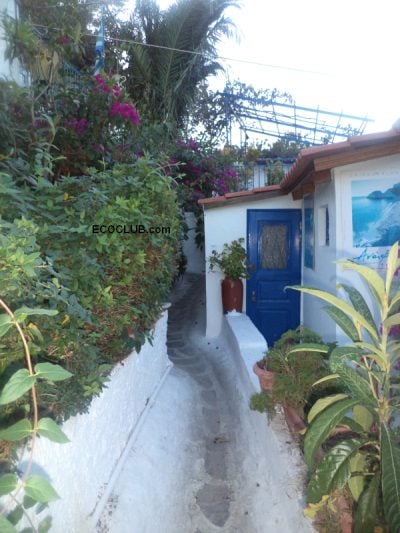
Non-ostentatious, quickly-built and modest enough so as to be missed by the law in the 1840s, today fortuitously missed by many high-season tourists fixating on the Acropolis: the Anafiotika neighbourhood, right below the massive Acropolis rock, on its shady, north-eastern slopes, offers a surreal and serene aegean island experience just 1 km from the political (and occasionally literal) battlegrounds of Syntagma Square; this tiny quarter is not-to-be missed by serious travellers. Its island architecture is an authentic product of builders from Anafi, an island east of Santorini - one so poor and barren that it was a place of exile during the turbulent 20th century. The first two houses (two rooms really) were, allegedly, built by G. Damigos, a carpenter and M. Sigalas, a stone mason, for their families over a few nights, with the fear of police arriving as this was a no-building area, protected since 1834, due to its high archaeological value. When police eventually arrived, the semi-legend continues, they did not have either the desire or the ability to arrest them, due to an old Othoman era customary law which forbid the demolition of newly-built homes. Contradicting laws exist to this day in Greece, and sometimes, as in...
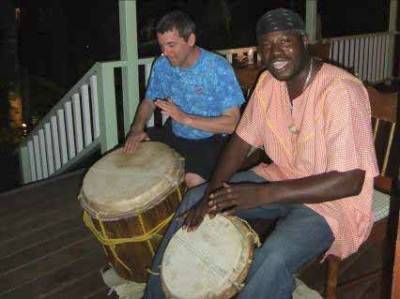
Over the past seven years The Battle of the Drums has become an integral part of the Garifuna celebrations that culminate with Yurumein, the reenactment of the arrival of the Garifuna on the shores of Belize on 19 November. On the evening of Friday 16 November the Battle of the Drums “Food & Fete” brings people together from all walks of life to socialize, network and enjoy an evening of good food and great Garifuna music. It will showcase Garifuna Cuisine fused with contemporary cooking styles, dishes and menus prepared by chefs from the Radisson Fort George in Belize City, Laru Beya in Placencia and Belcampo Lodge of Punta Gorda. It will also feature local and national Garifuna musical performers performing great paranda and other Garifuna music. Performers will include Paul Nabor, Mario and the Umalali Group, Godfrey Sho and the Culture Dynamics and Lascelle Martinez and the PG Vibes. The Battle of the Drums Competition on Saturday 17 November is a drumming competition and show that allows groups to compete and display their musical artistry in playing five different categories of Garifuna drumming. The first Battle of the Drums was held in Punta Gorda Town on November 17,...
From 15-18 September, 2012, I accompanied a group of tour operators from Ecuador, the UK and the US who visited Colombia’s Pacific coast in the Chocó region. We had been invited to assess the work of a Colombian NGO, Mano Cambiada (http://nuquipacifico.com). The project is based in the town of Nuquí, which can reached only by air from Medellín (1¼ hours) or Quibdó (about 20 minutes; Quibdó is 8-9 hours by bus from Medellín), or by boat from Buenaventura (18-20 hours). The population of the Chocó region is largely Afro-Colombian. The following is a summary of a presentation to our group by Mano Cambiada and BioRedd+ (www.bioredd.org, the Colombian agency working with Mano Cambiada to implement a grant from USAID) on 17 September 2012. Mano Cambiada has been operating for six years. Its primary aim is to make the people of Chocó proud of what they have and of their culture. For a long time the people on the coast have lived “in paradise” (it is a beautiful part of the country, with tropical forest and mangroves on the shores of the Pacific), but most of the time those people have been complaining about their poor lot. Mano Cambiada...
In September 2012, I visited Colombia on a research trip for the South American Handbook (Footprint Travel Guides, www.footprinttravelguides.com). In Bogotá I met two members of More Local, an operator which is a member of ECOCLUB.com: Juan Camilo Peña, Director for The Americas of Large Minority (www.largeminority.com), and Nicolás Gómez of More Local (www.morelocal.co), which is part of the Large Minority group. Large Minority started in Sri Lanka with Lanka Challenge (www.lankachallenge.com). It also has a similar challenge in Cambodia (www.cambochallenge.com). In 2011 More Local was launched in Colombia to highlight authentic, real culture and responsible travel, with year round experiences, in the Amazon, the Coffee Region and around Bogotá. See www.morelocal.co/why-us/meaningful-travel for the basic principles behind More Local’s experiences. In addition to the projects mentioned on that page, they also contribute to reforestation projects in Antioquia. Their guides speak German, English and Spanish. French is also spoken. Individuals can join tours or can be catered for on their own. A couple of general points that Juan and Nicolás made: Colombia is a new market with a lot of potential. There is still some fear surrounding Colombia as a destination, so the first priority is to help...
While international tourist arrivals are falling for a second consecutive year and accommodation rates slashed to bargain levels, the government’s neoliberal agenda includes the long-lease of at least 40 “uninhabited” islands for “tourism development” ignoring the fact that most are considered important bird and marine conservation areas and some are actually located within marine protected areas. In fact some in the government, dreaming of billions of euros in proceeds, would have liked to sell these islands outright. However, for the time being this is not quite legit / allowed by the constitution (money - launderers beware) - although exceptions exist such as a few small private islands (famously Skorpios and Spetsopoula) owned by heirs of shipping magnates, lesser known but richer industrialists and some others incredulously claimed by heirs of traditional goat herdsmen-boatsmen perpetually looking for gullible buyers.
Domestic tourism in particular has taken a big hit, reflected in - among other things - the large losses of ferry operators and the huge number of hotels of all sizes which are for sale and up for grabs by foreign investor funds, offshore schemes and assorted money-launderers.
Other government plans include the abolition of the unemployment benefit paid by the state to hotel workers - the tourism season in most Greek destinations is just 3 months long and hotel employees are usually laid off in October to be rehired the following June - and the selling-off of large state-owned properties for tourism development such as the Afantou estate in Rhodes and the area of the old Athens airport in Elliniko.
Last year TAEC was involved in a project to help document traditional children's games in Luang Prabang. For this UNESCO project, TAEC collaborated with the Children's Cultural Centre. The games we documented along with others will be the focus of the new Exhibition on Traditional Children's Games in South-East Asia at the Museum of Siam in Bangkok. If you are in that area, the exibit will be open from August 18 to September 16, 2012.
The angle for this BBC reportage is unclear to me -- How do fish markets, Greek coffee, cruise ship tourists and low budget carriers work together to manifest, “Many stories, one heart?” What makes their initiatives different from the same destructive dinosaur mass tourism? Expensive new posters? http://news.bbc.co.uk/2/hi/programmes/fast_track/9745749.stm Meanwhile, Yiannis Boutaris, Mayor of Thessaloniki, in the May 2012 issue of National Geographic Traveler said, "I want Thessaloniki to be a model for sustainable tourism in Greece." http://travel.nationalgeographic.com/travel/traveler-magazine/tales-from-the-frontier/greece/ We had high hopes....
One of many great interviews with Vandana Shiva. March 9, 2012, George Stroumboulopoulos Last night on the show, George celebrated International Women's Day with physicist, food activist and thinker Vandana Shiva. She visited and discussed Navdanya, her program that promotes local and ecological food models. …here is the complete conversation with the world leader: http://www.cbc.ca/strombo/world/vandana-shiva-full-extended-interview.html